
Reviewed · HISTORICAL TOURS
Trieste: History of Prosecco and the Karst Region
Wine country begins close to Trieste. This seven-hour outing crosses into the Karst region for Prosecco wine history, a family-run winery, medieval Štanjel, and the remarkable Ferrari Garden. I especially like the mix of Italian and Slovenian culture, plus the generous tasting of wine, cheese, cured ham, olive oil, and potica. The main consideration is timing: one recent outing finished after five hours, so the actual day may be shorter than the advertised seven.
I also like that this is not only a wine stop with a scenic add-on. You get a useful introduction to Maks Fabiani, the architect and mayor who reshaped Štanjel, while guides such as Dean Tadic and Ernest bring plenty of local context. If your main goal is sparkling wine alone, know that the tasting may feel more like a broader Karst wine experience than a dedicated Prosecco tour.
In This Review
- Key points to know before booking
- Why this Prosecco and Karst outing is worth your time
- Pickup from Trieste and the road into the Karst
- Prosecco village and the story behind the wine
- The winery tasting and its generous Karst table
- Crossing into Slovenia and understanding the Karst
- Štanjel, the medieval hilltop village
- Maks Fabiani and the Ferrari Garden
- How the seven-hour schedule may work in practice
- Who will enjoy this tour most
- Price, food, and overall value
- Booking details that matter
- Should you book the Prosecco and Karst tour?
- FAQ
- Where does the tour begin for hotel passengers?
- Where does the tour begin for cruise passengers?
- How long is the tour?
- What language is the tour conducted in?
- Is transportation included?
- What food and drinks are included?
- Does the tour visit Ferrari Garden?
- Can I cancel for a full refund?
Key points to know before booking
- Prosecco has a place-based story: You visit the village of Prosecco and hear how the name connects to the area and its vineyards.
- The tasting goes beyond bubbly: Expect local wine with dry-cured ham, cheese, olive oil, charcuterie, and Slovenian potica.
- Štanjel gives the day historical shape: Its old center, hilltop setting, and Patron Saint Daniel connection add more than a quick photo stop.
- Ferrari Garden is the visual highlight: Maks Fabiani’s park is the most important inter-war park design in Slovenia.
- The guide matters here: Dean Tadic has been praised for clear explanations of Trieste, Slovenia, customs, legends, and local life.
- Check the day’s timing: The stated duration is seven hours, but one outing lasted exactly five, which could matter if you want more time in Slovenia.
Why this Prosecco and Karst outing is worth your time

From Trieste, it is easy to spend all your time around the seafront and grand Austro-Hungarian buildings. This tour gives you a different view of the area, one shaped by limestone, vineyards, border changes, village traditions, and Slovenian culture.
That mix is the real value. You are not simply driven to a winery, handed a glass, and sent home. The day connects Prosecco wine, the Karst plateau, and Štanjel into one story. You get food, architecture, local wine, and views without having to arrange several separate trips.
The price is $149 per person. That is not a bargain-basement excursion, but it includes transportation, a guide, insurance, and wine and food tastings. For a visitor without a car, the price can make sense because it combines places on both sides of the Trieste area and removes the trouble of planning a cross-border day.
Still, value depends on your priorities. If you want a slow, wine-focused day with several producers, this may feel too broad. If you want a well-organized introduction to the Karst region, with enough tasting to make lunch unnecessary for many people, the package is more convincing.
More runs over the Italian border:
- From Trieste: Ljubljana and Lake Bled
★ 4.7 · 362 reviews - From Trieste: Lake Bled and Ljubljana Tour
★ 4.6 · 233 reviews - Trieste: Ljubljana Capital of Slovenia Tour
★ 4.5 · 12 reviews
Pickup from Trieste and the road into the Karst
Hotel passengers meet at the centralized point in front of Hotel Savoia Excelsior Palace on Riva del Mandracchio, close to Piazza Unità d’Italia. Cruise passengers can be collected at the cruise terminal where their ship is docked.
This arrangement is useful, especially for cruise passengers with limited time in Trieste. You should confirm the exact pickup instructions when booking, since the hotel meeting point and cruise terminal are different locations.
The day is conducted in English, with transportation included. A live guide is important on this route because the sights are tied together by local history rather than by one famous monument. A good guide can explain why Prosecco is connected to the wider area, how the Karst shaped settlement, and why Štanjel looks the way it does.
Dean Tadic received especially strong praise for his clear knowledge of Trieste, Slovenia, and the surrounding region. His strengths were described as history, customs, legends, and everyday activities in the villages. Ernest has also been praised for being personable, flexible, and willing to give people time for questions.
That matters because this is a place where borders and identities overlap. A guide who can explain the area in plain language adds real value.
Prosecco village and the story behind the wine
The first major stop is Prosecco, the village associated with the famous sparkling white wine. The point is not simply to taste a bottle with a familiar label. You get an introduction to the history of Prosecco and the vineyards that have long mattered in the area.
The name can cause confusion. Today, Prosecco is known across the world as an Italian sparkling wine, but the tour places its story in a particular border region rather than treating it as a generic product. That local connection gives the tasting more meaning.
You can expect to hear about the area’s historically significant vineyards and the role of Prosecco in the region. The wording of the experience suggests that the sparkling wine is part of a wider wine tradition, not the only drink you will taste.
This is where expectations matter most. One participant described the day as more of a wine tour than a Prosecco-only tour. If you are hoping to compare several styles of sparkling Prosecco, ask for clarification before booking. If you enjoy learning how wine fits into local culture, the broader approach is a plus.
The winery tasting and its generous Karst table
The winery visit is one of the most enjoyable parts of the day. The setting is described as an exceptional winery, and the tasting includes some of Italy’s best-known sparkling wine along with local food.
The strongest detail here is the family-run character. At least one visit included a son of the winery family explaining the production process. That kind of host can make a tasting more personal than a polished commercial presentation.
The food is not a token plate of crackers. You may be served dry-cured ham, cheese, local olive oil, charcuterie, and potica, a Slovenian sweet bread. Anne and Jim specifically enjoyed the combination of wine, olive oil, a charcuterie board, and potica.
One account described the wine portions as so generous that the group became half-sloshed. That is a useful warning, delivered with a smile: pace yourself. You have more sightseeing afterward, and a tasting can feel very different when it comes with a full spread of cured meat and cheese.
The food also helps explain the Karst region. Dry-cured meat and firm cheeses are practical local foods, suited to a place with strong rural traditions. Potica adds a Slovenian touch and reminds you that this is not simply an Italian wine excursion.
Because the tour includes food and wine, many people may find the tasting substantial enough to carry them through the afternoon. No separate lunch is listed, so do not assume a full restaurant meal is included.
More History Tours in Ljubljana:
- Historic Ljubljana Tour with Ljubljana Castle included
★ 5.0 · 11 reviews - Ljubljana Private Family-Friendly Historic Old Town Guided Tour
★ 5.0 · 6 reviews - Plečnik’s Ljubljana -UNESCO heritage- A walk among architect Plecnik’s creations
★ 5.0 · 5 reviews - Ljubljana: UNESCO cultural heritage tour
★ 5.0 · 2 reviews
Crossing into Slovenia and understanding the Karst
The Karst region is more than a pretty rural backdrop. Its limestone terrain has shaped settlement, agriculture, architecture, and views. The tour uses the trip to Štanjel to explain the region and its connection to both Trieste and Slovenia.
You will likely notice a sense of transition as the outing moves away from the city. The experience is valuable because it gives you a chance to see how quickly the surroundings change while remaining tied to the same borderland culture.
The Karst is also a region where food and wine make immediate sense. The tasting introduces local products, while Štanjel shows how people built and adapted villages on elevated ground. Together, these stops provide a more complete picture than either one could offer alone.
I would choose this tour for someone who likes context. You do not need to be a wine expert or an architecture fan. You only need curiosity about why this corner of Europe has Italian, Slovenian, and Central European influences in the same day.
Štanjel, the medieval hilltop village
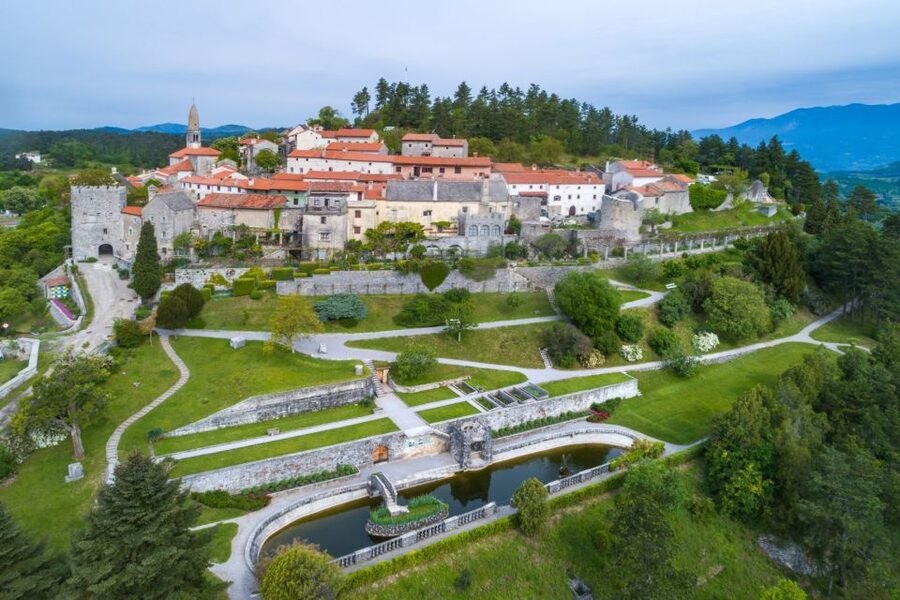
Štanjel is the architectural center of the outing. This medieval village sits on a scenic hill in the Karst region, with wide views over the surrounding area. Its name comes from Saint Daniel, the village’s patron saint, giving the place a cultural connection that reaches beyond its stone walls.
The old center has changed over the centuries, but it has kept what the tour calls the spirit of the Karst. That phrase is best understood through the village itself: compact streets, historic structures, a hilltop position, and views that make the setting part of the experience.
You will have time to walk through the village and see its important structures. The exact amount of free time can vary, so this is another reason to confirm the schedule if you want a long, unhurried visit.
Štanjel is not presented as a museum frozen in time. Its identity was shaped by change, including the damage and disruption connected with both world wars. That leads to one of the most interesting parts of the story, the work of Maks Fabiani.
Maks Fabiani and the Ferrari Garden
Maks Fabiani was an architect and mayor who influenced Štanjel during the years surrounding the two world wars. His approach was not to erase the old village and replace it with something new. He preserved its character while repairing and renewing public buildings.
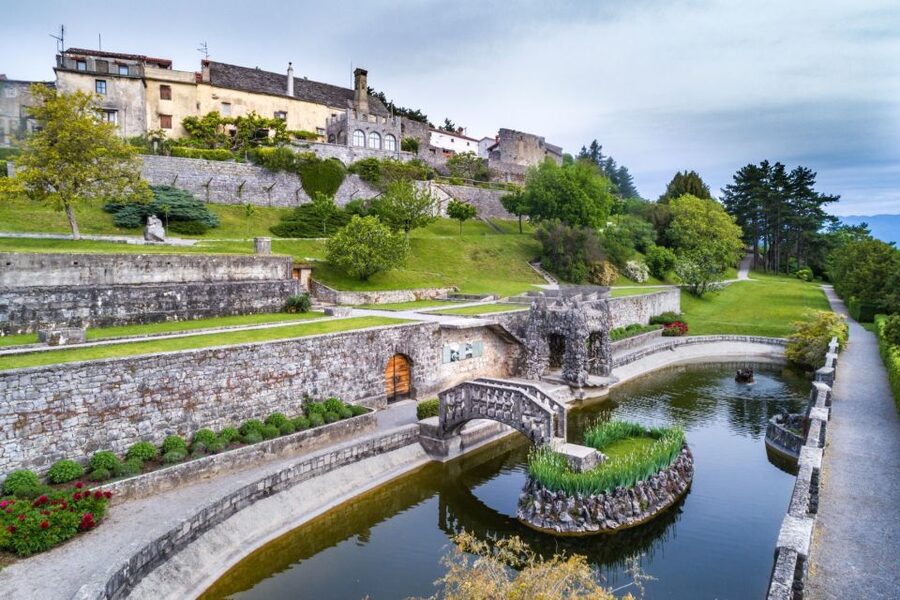
His most notable work here involved Ferrari Villa and the Ferrari Garden. The park is regarded as the most significant park design in Slovenia from the inter-war period, which is a strong claim for a relatively small village.
The garden gives the Štanjel stop its visual reward. You can walk through the park, see how it relates to the villa and the hilltop village, and enjoy the broad views. The experience is not only about flowers or formal design. It shows how modern ideas were fitted into an older setting.
I like this stop because it adds thought to the day. After wine and food, you get architecture and public design. Fabiani’s work also gives your guide something worthwhile to explain: how a local leader protected the village’s character while still making practical improvements.
The park may be the best part of the tour for photographers, garden lovers, and anyone who wants a break from tasting rooms. It is also a good reason to choose this outing instead of a standard winery transfer.
How the seven-hour schedule may work in practice
The advertised duration is seven hours, with starting times available according to the date you choose. That should give enough room for transportation, the Prosecco introduction, the winery tasting, the drive to Štanjel, the village walk, and Ferrari Garden.
But do not treat seven hours as guaranteed time on site. One outing returned to Trieste after exactly five hours. That person enjoyed the winery and food but would have preferred to spend the extra two hours exploring more of Slovenia.
This creates two possible readings. If you prefer a compact day, finishing early may be welcome. You can return to Trieste with time for dinner, a museum, or an evening walk around Piazza Unità d’Italia. If you want a full seven hours outside the city, confirm how long the current schedule allows at each stop.
The difference also matters to cruise passengers. A shorter outing may leave a useful buffer before ship departure, but you should still verify the meeting and return times yourself. The tour includes pickup and transportation, but the supplied information does not promise a specific return time.
Who will enjoy this tour most
I would recommend this experience to you if you want several kinds of sightseeing in one day:
- You enjoy wine but also want history and architecture.
- You are staying in Trieste and want to see nearby Slovenia.
- You prefer a guide to explain borderland culture and local traditions.
- You like tastings that include real regional food.
- You want a scenic village without arranging public transport or a car.
- You are visiting from a cruise ship and need an organized excursion with pickup.
It may be less suitable if you want an intensive wine course, a long independent walk, or a full restaurant lunch. The day moves between several themes, so it rewards variety rather than single-minded focus.
The guide’s style may also shape your experience. Dean Tadic has been praised for humor, clarity, and detailed regional explanations. Ernest has been praised for adapting to individual wishes and allowing time for questions. Those qualities are particularly useful here, since the route depends on interpretation.
Price, food, and overall value
At $149 per person, this is a mid-priced cultural and food outing rather than a simple sightseeing transfer. The included guide, transportation, insurance, wine, and food tastings make the cost easier to justify.
The tasting is the key value point. You are not paying only for access to a winery. You also receive a spread that can include dry-cured ham, cheese, olive oil, charcuterie, and potica. The food helps turn the tasting into a substantial regional introduction.
The second value point is variety. Prosecco, Karst traditions, Štanjel, Ferrari Garden, and Fabiani’s work would be difficult to combine efficiently without private transport. You also avoid having to research wineries, border routes, and village access yourself.
The main value concern is time. If the tour runs closer to five hours than seven, the price may feel high to someone expecting a full-day exploration. Before paying, check the date, pickup time, estimated return, and planned length of the Štanjel visit.
Booking details that matter
Free cancellation is available up to 24 hours in advance for a full refund. You can also reserve now and pay later, which is useful if your Trieste plans are still shifting.
The tour is offered in English with a live guide. Hotel passengers use the meeting point near Hotel Savoia Excelsior Palace, while cruise passengers are collected at the Trieste cruise terminal.
The supplied information does not give a group size, vehicle type, exact winery name, or a detailed accessibility statement. If any of those points affect your decision, ask the provider before booking rather than assuming.
Should you book the Prosecco and Karst tour?
Book it if you want a well-rounded day that links wine, food, Slovenian village life, and architecture. The combination of a winery tasting and Ferrari Garden is the strongest reason to choose it, and the guides Dean Tadic and Ernest appear to add genuine value through history, humor, and personal attention.
Think twice if your only aim is sparkling wine, or if you require a full seven-hour schedule. The tour may be broader than its title suggests, and the actual day can be shorter.
For most visitors based in Trieste, I would choose this as a practical way to see the Karst region without renting a car. Just confirm the timing, arrive ready for a generous tasting, and leave room in your plans for the possibility of an early return.
FAQ
Where does the tour begin for hotel passengers?
Hotel passengers meet at a centralized point in front of Hotel Savoia Excelsior Palace on Riva del Mandracchio, 4, near Piazza Unità d’Italia.
Where does the tour begin for cruise passengers?
Cruise passengers are picked up at the Trieste cruise terminal where their ship is docked.
How long is the tour?
The stated duration is seven hours. One reported outing lasted five hours, so you should confirm the expected schedule for your date.
What language is the tour conducted in?
The tour has a live English-speaking guide.
Is transportation included?
Yes. Transportation from the stated Trieste pickup locations is included.
What food and drinks are included?
Wine and food tastings are included. The local products can include dry-cured ham, cheese, olive oil, charcuterie, and potica, a Slovenian sweet bread.
Does the tour visit Ferrari Garden?
Yes. The tour includes a walk through Ferrari Garden in Štanjel, designed by architect and mayor Maks Fabiani.
Can I cancel for a full refund?
Yes. You can cancel up to 24 hours in advance for a full refund. You can also reserve now and pay later.
New around Ljubljana
- Zagreb to Slovenia: Discover Bled and Ljubljana in a Day★ 4.7 · 2 reviews
- Woop! Fun park with 21 attractions★ 4.6 · 3 reviews
- Gokart experience at Woop! karting – the fastest attraction★ 4.0 · 5 reviews
- Private Zagreb Tour from Ljubljana★ 4.5 · 3 reviews
- Private Fun Park activity in Ljubljana★ 4.5 · 3 reviews
- Wine and Culinary Adventure in Jeruzalem – Full Day Tour from Ljubljana or Ptuj★ 5.0 · 5 reviews
- Velika Planina Guided Hike from Ljubljana★ 4.0 · 5 reviews
- Private tour of Venice from Ljubljana★ 5.0 · 6 reviews
Historical Tours, compared.
Historic Ljubljana Tour with Ljubljana Castle included
Read our review →
Ljubljana Private Family-Friendly Historic Old Town Guided Tour
Read our review →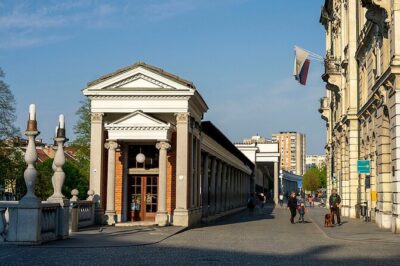
Plečnik’s Ljubljana -UNESCO heritage- A walk among architect Plecnik’s creations
Read our review →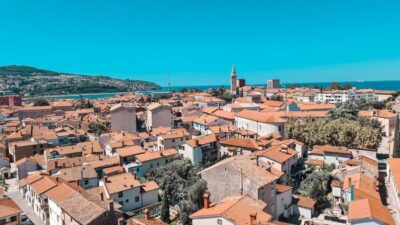
Sip & Step: A Flavorful Walk Through Koper’s History
Read our review →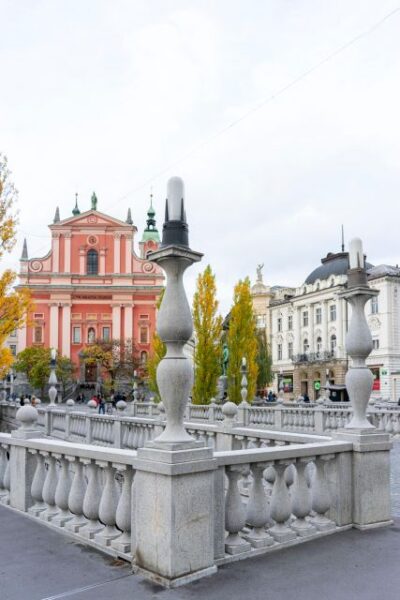
Browse the lists this tour appears in