
Reviewed · HISTORICAL TOURS
Ljubljana: UNESCO cultural heritage tour
Ljubljana makes grand ideas feel wonderfully walkable. I like the way this private tour links Jože Plečnik’s architecture with the city’s daily life, from the National Library to the food smells of Central Market. I also like the small details, especially the lamps and pyramids that are easy to miss alone. The one drawback is the price: $223 is fair for a group of up to seven, but expensive for one or two people.
The easy two to four hour walk gives you a useful first look at Ljubljana’s Old Town and the story of its transformation from a provincial town into Slovenia’s capital. Guide Urbano earned especially warm praise for making the history fun and clear, though the exact route and length may vary.
In This Review
- Key details to know before you book
- Why Plečnik is the key to understanding Ljubljana
- Starting at Krekov trg beside the castle funicular
- The National Library and Plečnik’s grand public vision
- Križanke Complex and the shape of a new capital
- Triple Bridge, Cobblers Bridge, and Trnovo Bridge
- Central Market brings architecture down to earth
- The pyramids and lamps you might otherwise miss
- A guide-led story, with Urbano as a strong example
- How long the walk takes and what the price means
- Who should take this Ljubljana UNESCO tour
- Should you book the Plečnik UNESCO walk?
- FAQ
- Where does the tour begin?
- Can the guide meet me somewhere else?
- How long does the tour last?
- How many people can join the private group?
- Which languages are available?
- Is the walking route physically difficult?
- Is the tour wheelchair accessible?
Key details to know before you book
- Plečnik’s Ljubljana: See how one architect shaped bridges, squares, markets, street lights, and major public buildings.
- Small details with big meaning: Count the original lamps and look for Plečnik’s pyramids along the route.
- Major sights included: Visit or explore the National Library, Križanke Complex, Central Market, Triple Bridge, Cobblers Bridge, and Trnovo Bridge.
- Private and flexible: The price covers a private group of up to seven, with pickup available anywhere in central Ljubljana.
- An easy walk: The tour is not physically demanding and is wheelchair accessible.
- Useful local advice: Snacks are included, and your guide can suggest other things to do in Ljubljana or elsewhere in Slovenia.
Why Plečnik is the key to understanding Ljubljana
Ljubljana is a small capital, and that is part of its charm. You can cross the center on foot, yet the city has a strong architectural identity because Jože Plečnik gave many of its public spaces a shared visual language.
Plečnik did not treat a bridge as only a way to cross water or a market as only a place to buy food. He used columns, lamps, steps, pyramids, stonework, and carefully placed buildings to create a city that felt important. His ambition was grand: he imagined Ljubljana as a new Athens.
That idea gives the tour a useful theme. Instead of looking at isolated buildings, you learn to notice how the parts connect. A lamp on a bridge, a pyramid beside a walkway, or a market building near the river becomes part of a larger plan.
The UNESCO designation applies to Plečnik’s work in Ljubljana, along with related sites in Slovenia. This tour helps turn that formal title into something you can see at street level. You are not simply told that the architecture matters. You are shown the details that make it recognizable.
More History Tours in Ljubljana:
- Historic Ljubljana Tour with Ljubljana Castle included
★ 5.0 · 11 reviews - Ljubljana Private Family-Friendly Historic Old Town Guided Tour
★ 5.0 · 6 reviews - Plečnik’s Ljubljana -UNESCO heritage- A walk among architect Plecnik’s creations
★ 5.0 · 5 reviews
Starting at Krekov trg beside the castle funicular
The meeting point is by the fountain in the middle of Krekov trg, near the Ljubljana Castle funicular. This is a practical place to begin because it puts you close to the Old Town and the riverfront.
If you prefer not to make your way there, the guide can meet your group elsewhere in central Ljubljana. That is useful if you have a hotel or apartment in the center, though you should arrange the exact point in advance.
The starting area also helps set the scene. Ljubljana Castle rises above the city, while the historic center spreads out below. The tour focuses on Plečnik rather than the castle itself, but beginning near the funicular gives you an immediate sense of how compact Ljubljana is.
This is a private group tour, with up to seven people covered by the $223 price. For a full group, that works out to about $32 per person before any currency conversion. For two people, the cost is much harder to justify unless you place a high value on a private guide and personal pacing.
The National Library and Plečnik’s grand public vision
The National Library is one of the important architectural stops. It is a good place to see how Plečnik could make a working public building feel ceremonial and symbolic.
The tour is designed to help you understand the architect’s choices rather than simply photograph the façade. Expect attention to the building’s design, its role in the city, and the way Plečnik used architecture to express national identity.
The supplied details do not guarantee access to every interior space, so think of this as an architectural visit rather than a promise of a full museum-style tour inside. Your guide can explain what is available on the day.
This distinction matters. If your main goal is to spend time inside the National Library, confirm the access arrangements when booking. If your goal is to understand how it fits into Plečnik’s Ljubljana, the stop should be much more satisfying.
Križanke Complex and the shape of a new capital
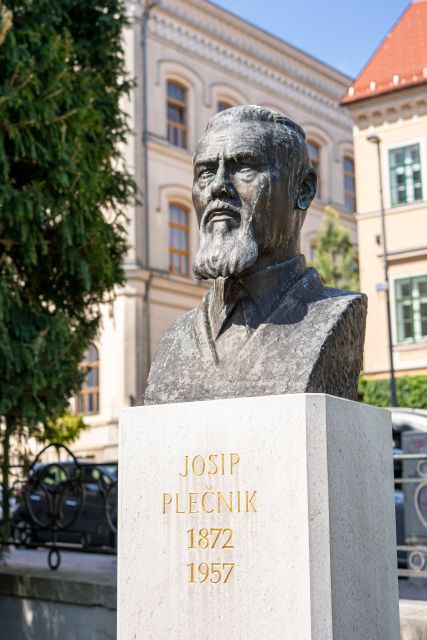
The Križanke Complex is another major Plečnik site on the route. Its inclusion helps show the range of his work, from formal civic buildings to spaces with a more layered and adaptable character.
The tour presents Križanke as part of Plečnik’s plan for Ljubljana. You can look beyond the obvious lines and surfaces and consider how the architect reshaped existing places rather than creating an entirely new city from scratch.
That is one of the best reasons to take a guide here. Architecture can be easy to admire but hard to interpret. A local guide can point out why a particular arrangement matters and how it relates to the wider city.
The route is not physically demanding, but you will be walking between several central sights. Comfortable shoes remain sensible. The pace should be manageable for most people, and the activity is listed as wheelchair accessible.
A few more Ljubljana trips to compare
- Ljubljana: Postojna Cave & Predjama Castle Tickets and Tour
★ 4.9 · 2,146 reviews - From Ljubljana: Trip to Lake Bled and Bled Castle
★ 4.7 · 1,426 reviews - Postojna Cave and Predjama Castle – Entrance Tickets Included
★ 5.0 · 938 reviews - Slovenia in One Day: Lake Bled, Postojna Cave and Predjama Castle
★ 5.0 · 879 reviews
Triple Bridge, Cobblers Bridge, and Trnovo Bridge
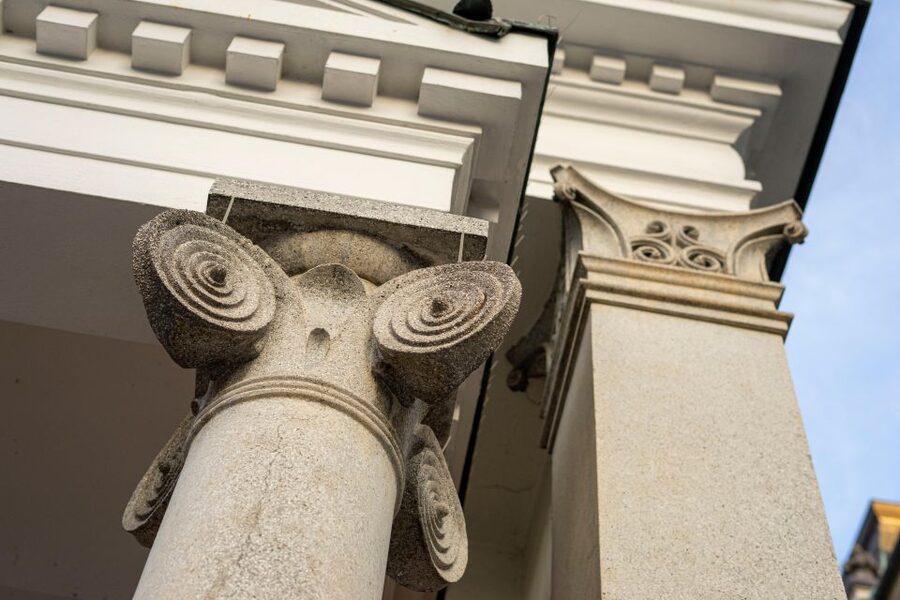
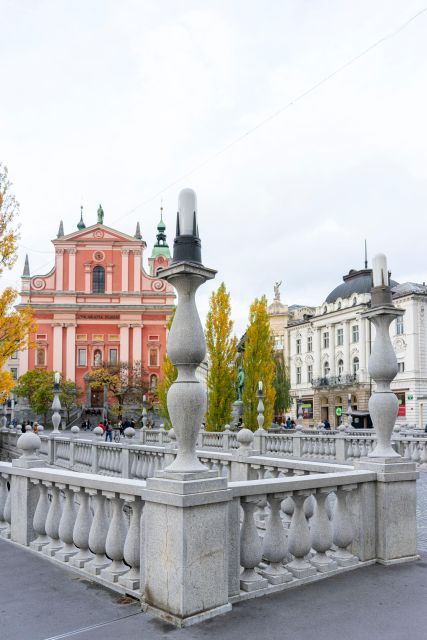
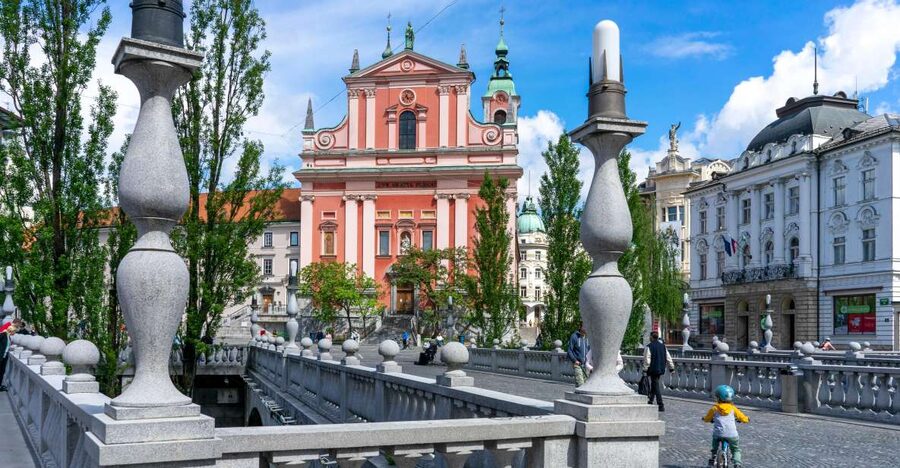
Bridges are among the most memorable parts of this tour because Plečnik treated them as civic spaces, not plain crossings. You will look at the lamps on Triple Bridge, Cobblers Bridge, and Trnovo Bridge, and the guide will help you compare their designs.
Triple Bridge is especially useful for seeing how Plečnik altered an existing crossing to create a larger urban setting. The name is literal: several bridge sections work together, creating a distinctive passage between the riverbanks.
At Cobblers Bridge, the lamps and overall arrangement invite a closer look. It is the sort of place you might cross quickly on your own, then realize later that its details were carefully planned.
Trnovo Bridge adds another piece to the story. Counting Plečnik’s lamps at each bridge gives the walk a playful task, but it also makes you slow down. You stop looking at the river only as scenery and begin to read the bridge as part of the city’s design.
The precise number of lamps or pyramids is not provided in the tour details, and the point is not a quiz with a fixed score. The value lies in learning what to look for. After the tour, you may notice Plečnik’s hand in places you would otherwise pass without a second glance.
Central Market brings architecture down to earth
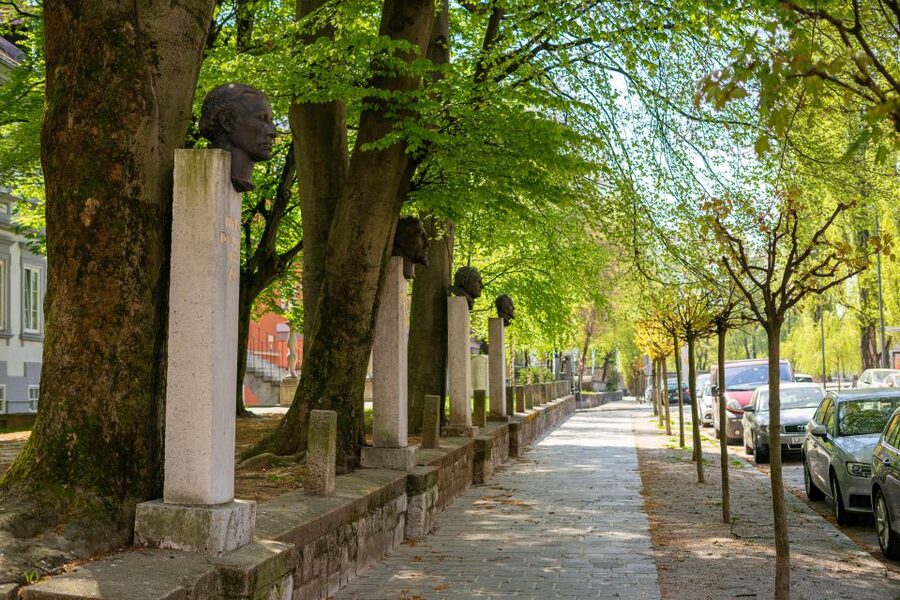
Central Market gives the tour a welcome change of mood. After formal buildings and bridges, you follow the fragrances of a working market, where architecture meets everyday shopping.
The market is not included merely as a scenic stop. Plečnik also designed a beautiful market building here, so you can see how his ideas reached into ordinary city life. The setting helps explain that his project for Ljubljana was not limited to government buildings or grand monuments.
The market can be one of the most enjoyable parts for your senses. You may notice food aromas, changing sounds, and the practical rhythm of a place used by local people. Snacks are included, which fits naturally with this stop, though the tour details do not specify what the snacks are.
If you enjoy architecture but dislike tours that feel too formal, Central Market should help keep the walk grounded. It gives you a chance to connect Plečnik’s design with the way Ljubljana functions today.
The pyramids and lamps you might otherwise miss
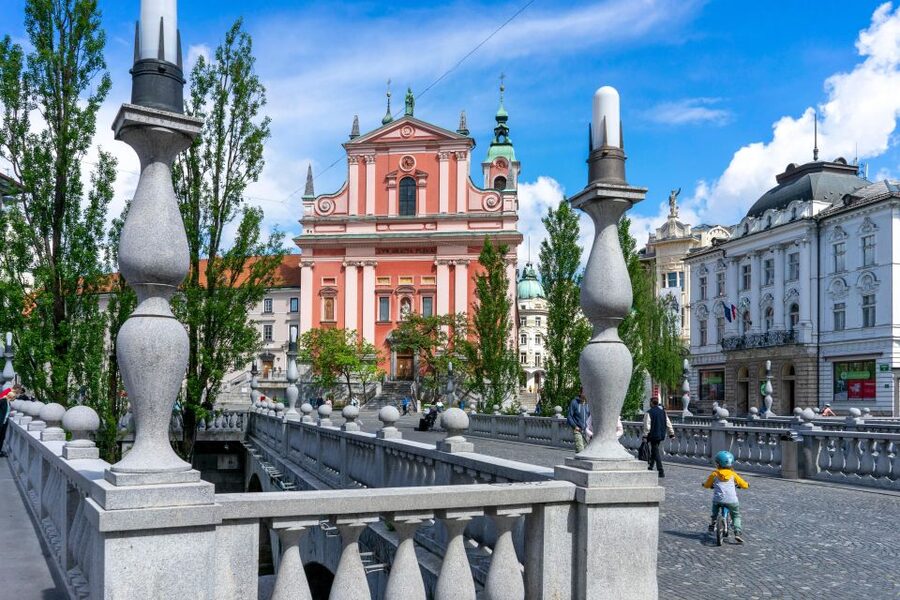
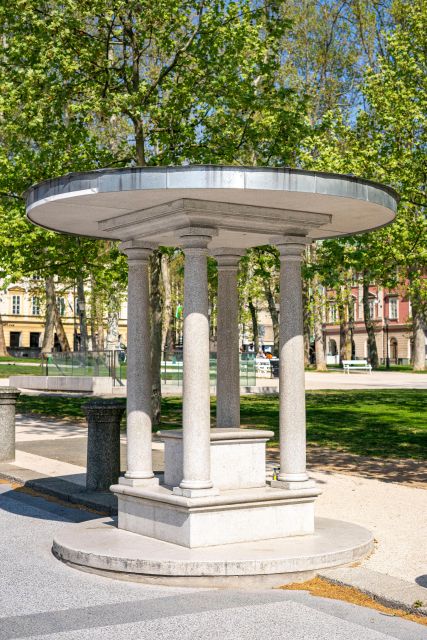
The title of the tour promises pyramids, and that is not a random decorative detail. Plečnik used pyramid shapes as part of his visual vocabulary, and the guide will explain what they mean within his work.
You will count the pyramids along the route, just as you count the lamps. This is a simple way to turn passive sightseeing into active observation. Instead of hearing a lecture while walking, you have small visual clues to find.
The lamps are equally important. Ljubljana contains a multitude of original light designs associated with Plečnik, and they help tie separate places together. Some visitors focus on famous façades and miss the street furniture. This tour deliberately corrects that habit.
Bring a camera, but keep it ready for details rather than only wide views. A close photograph of a lamp, stone feature, or pyramid may tell you more about Plečnik’s style than another picture of a whole square.
A guide-led story, with Urbano as a strong example
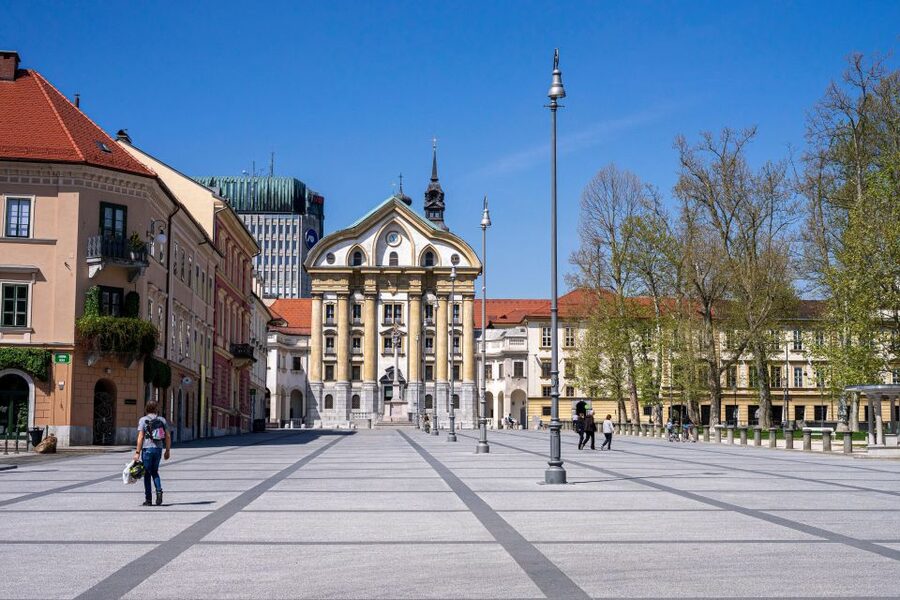
The guide makes a major difference on a tour built around architecture. The best version of this walk is not a list of dates. It is a clear explanation of how Plečnik imagined Ljubljana and why his choices still shape the city.
Urbano was praised for making the visit fun and interesting while explaining Ljubljana’s development from a medieval city into the capital it is today. He also included Prešeren Square, dedicated to national poet France Prešeren, giving the architectural story a wider cultural setting.
That is useful because Plečnik’s work makes more sense when you see it alongside Slovenia’s national identity. You are not only studying one designer. You are seeing how a small country presented itself through its capital.
The available ratings are both 5 out of 5. One booking described the tour as a good way to get oriented in the Old Town while learning about its buildings. That is exactly where this activity has the most value: early in your stay, when you want context before exploring on your own.
The listed guide languages are English, Croatian, Serbian, Slovenian, and Spanish. Language availability may depend on the selected departure, so check that before paying.
How long the walk takes and what the price means
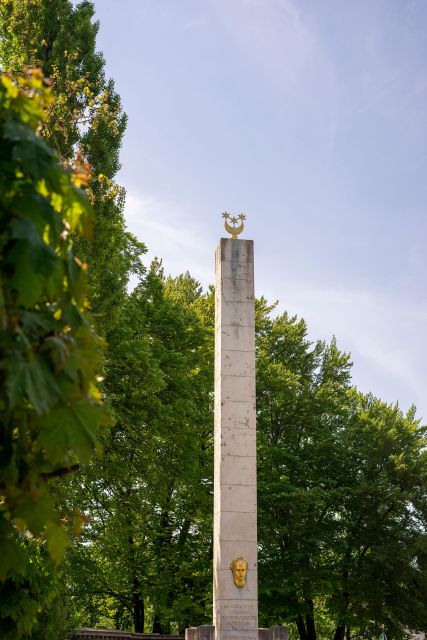
The duration is listed as two to four hours, a broad range that suggests the route can be adjusted. A shorter version may suit you if you have limited time, while a longer visit gives more room for questions, photographs, and explanations at the main sites.
The private format is the main reason to consider the cost. You are not paying $223 per person. You are paying $223 for the group, up to seven people. A family or group of friends can receive better value than a couple booking alone.
The price includes a professional certified local guide, snacks, fees, and taxes. Advice about other things to do in Ljubljana or Slovenia is also included. That last point can be helpful if you are at the start of a Slovenia trip and want practical ideas from someone based locally.
For one or two people, compare the price with a standard group walking tour before booking. For a larger party, the private format gives you more control and avoids being folded into a large crowd.
You can cancel up to 24 hours before the activity for a full refund, and the reserve-now, pay-later option keeps your plans flexible. These are useful safeguards when your schedule in Ljubljana is still changing.
Who should take this Ljubljana UNESCO tour
I would recommend this walk to first-time visitors who want a clear introduction to the Old Town and its architecture. It is also a strong choice for anyone who enjoys design but wants more than a quick photo stop.
Families and small groups may get the best financial value. The counting of lights and pyramids gives younger participants something concrete to watch for, while the easy route avoids a strenuous outing.
It suits visitors who want local context, too. The guide can connect architecture, public space, food, literature, and the growth of Slovenia’s capital in one continuous story.
You may want to skip it if you have already studied Plečnik closely or if your main interest is entering museums rather than walking through the city. The tour focuses on outdoor urban design and selected buildings, and the information provided does not promise extended interior access.
Should you book the Plečnik UNESCO walk?
Book it if you want to understand why Ljubljana looks the way it does, not just see its prettiest squares. The strongest features are the private format, the clear Plečnik theme, the bridges and market, and the attention to easy-to-miss lamps and pyramids.
The $223 price makes the most sense for a group of several people. Solo visitors and couples should think carefully about the cost, but the private guide, flexible duration, snacks, and local advice add real value.
For the best use of your time, schedule it near the beginning of your Ljubljana stay. Afterward, you will have a better sense of the Old Town, a sharper eye for Plečnik’s details, and useful ideas for the rest of Slovenia.
FAQ
Where does the tour begin?
The meeting point is by the fountain in the middle of Krekov trg Square, beside the Ljubljana Castle funicular.
Can the guide meet me somewhere else?
Yes. The guide can meet your group at another location in central Ljubljana.
How long does the tour last?
The stated duration is two to four hours. Starting times depend on availability.
How many people can join the private group?
The price covers one private group of up to seven people.
Which languages are available?
The listed languages are Croatian, English, Serbian, Slovenian, and Spanish.
Is the walking route physically difficult?
No. The tour is described as an easy walk and is not physically demanding.
Is the tour wheelchair accessible?
Yes. The activity is listed as wheelchair accessible.
New around Ljubljana
- Zagreb to Slovenia: Discover Bled and Ljubljana in a Day★ 4.7 · 2 reviews
- Woop! Fun park with 21 attractions★ 4.6 · 3 reviews
- Gokart experience at Woop! karting – the fastest attraction★ 4.0 · 5 reviews
- Private Zagreb Tour from Ljubljana★ 4.5 · 3 reviews
- Private Fun Park activity in Ljubljana★ 4.5 · 3 reviews
- Wine and Culinary Adventure in Jeruzalem – Full Day Tour from Ljubljana or Ptuj★ 5.0 · 5 reviews
- Private tour of Venice from Ljubljana★ 5.0 · 6 reviews
- Velika Planina Guided Hike from Ljubljana★ 4.0 · 5 reviews
Historical Tours, compared.
Historic Ljubljana Tour with Ljubljana Castle included
Read our review →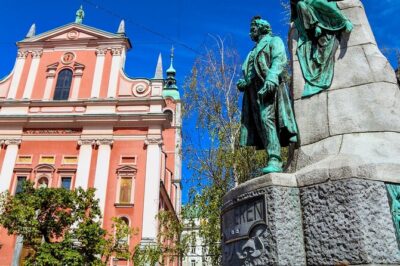
Ljubljana Private Family-Friendly Historic Old Town Guided Tour
Read our review →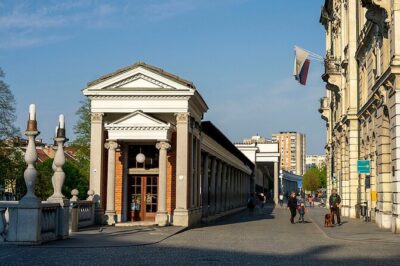
Plečnik’s Ljubljana -UNESCO heritage- A walk among architect Plecnik’s creations
Read our review →
Sip & Step: A Flavorful Walk Through Koper’s History
Read our review →Browse the lists this tour appears in