
Reviewed · WALKING TOURS
Šmartno: Village Walking Tour with Local Guide
History hides behind Šmartno’s quiet lanes. This private one-hour walk brings the fortified village to life through its seven towers, old farmhouses, church paintings, and stories from Roman times to today. I especially like the visit to the furnished kolon house and the chance to understand Goriška Brda beyond its vineyards. The main limitation is the short duration, so you will need to keep moving and save deeper exploration for afterward.
I also like that the tour costs $41 per group of up to five people, rather than charging each person separately. That makes it a strong value for a small family or group, though solo visitors and couples may find the per-person cost less striking. Guide Irena receives especially strong praise for making local history clear, lively, and easy to follow.
In This Review
- Key points to know before you go
- Why Šmartno is worth an hour of your time
- Roman times and the fortress that shaped the skyline
- Inside the kolon house, where rural life becomes personal
- A short film about Brda in the 1960s
- The narrow gase and Šmartno’s house design
- St. Martin’s Church and the meaning behind the paintings
- What Irena adds to the experience
- Is $41 good value for a private group?
- Who should book this Šmartno walk?
- Practical advice for making the hour count
- Should you book the Šmartno Village Walking Tour?
- FAQ
- Where does the Šmartno walking tour meet?
- How long does the tour last?
- How much does the experience cost?
- Is the tour private?
- What language is the tour conducted in?
- What does the tour include?
- Does the tour include shopping?
- How many fortress towers can you see during the tour?
- Will I visit a traditional house?
- Can I cancel the booking for a refund?
Key points to know before you go
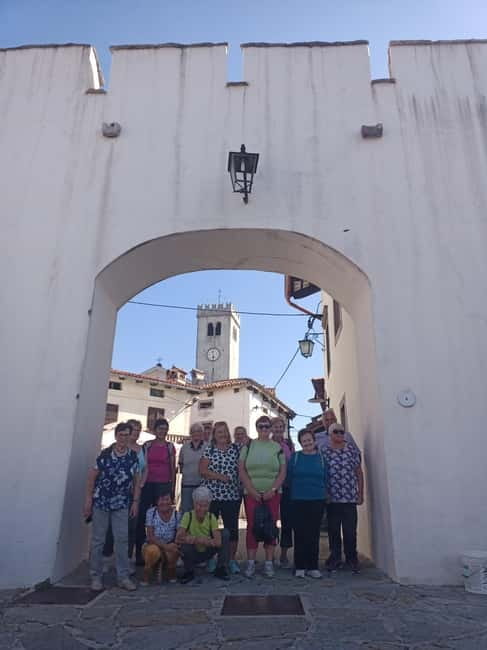
- Seven fortress towers shape the walk: You can look for the remaining towers and see five of them from Šmartno, while one is not accessible during the tour.
- The kolon house shows ordinary rural life: Its cellar, kitchen, bedroom, and balcony explain how a typical farmer’s household lived around the 1850s.
- The church tells a more complicated story: St. Martin’s Church contains colorful paintings by Tone Kralj, with meanings that your guide helps you notice.
- The price works best for groups: At $41 for up to five people, the private format can be excellent value for families and friends.
- Irena is a major strength: Her enthusiastic storytelling connects Roman-era events, fortress construction, local customs, and modern Brda.
- The pace is compact: One hour gives you a strong introduction, but not much time for lingering in shops, taking long photographs, or exploring independently.
Why Šmartno is worth an hour of your time
Goriška Brda is often associated with wine, rolling hills, and pretty village views. Šmartno gives you a different way into the region. Instead of simply looking across the countryside, you walk inside a compact settlement shaped by defense, farming, faith, and family life.
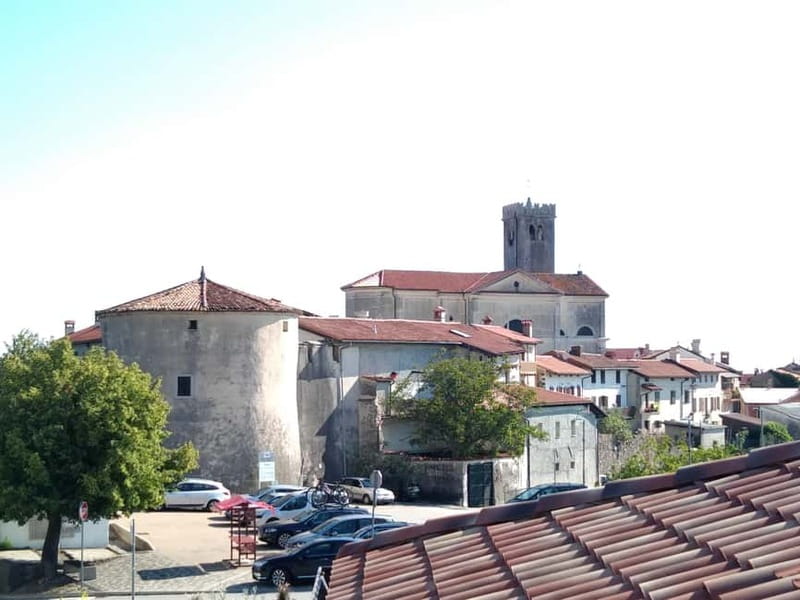
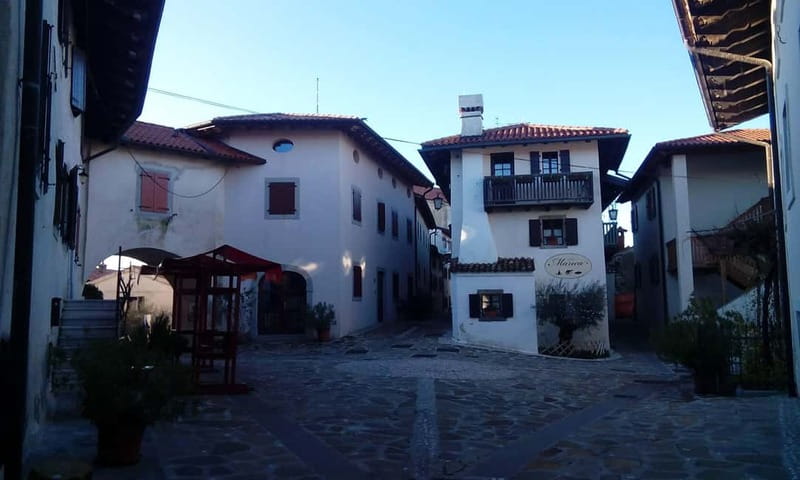
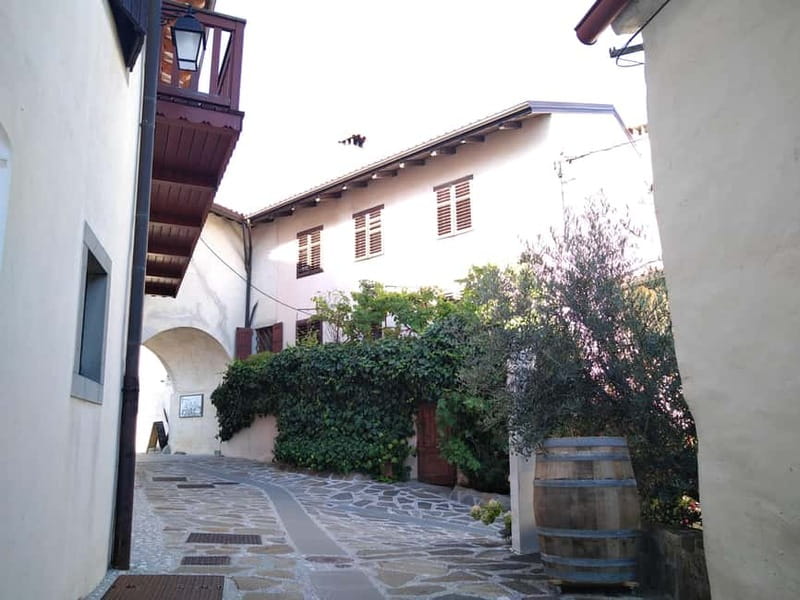
The village has a distinctive fortified form. Narrow lanes, old stonework, towers, and houses sit close together, creating a place that feels more like a small medieval town than an open farming village. That compact design is part of the story. Šmartno was not built only for charm. Its walls and towers had a practical purpose.
The tour begins near the large round tower and the village map, beside the parking area before the entrance. This is a useful meeting point because you can orient yourself before stepping into the lanes. You will not need to search through the village for your guide, and the map gives you a first look at the unusual shape of the settlement.
I like starting here because the village makes more sense once you know what you are looking at. Without context, a tower may seem like a picturesque old building. With context, it becomes part of a defensive system and a clue to the dangers that once reached this corner of Slovenia.
More Walking Tours in Ljubljana
- Ljubljana: Guided Walk & Funicular Ride to Ljubljana Castle
★ 4.6 · 576 reviews - Ljubljana: Slovenian Cuisine Walking Tour with Tastings
★ 4.8 · 472 reviews - Ljubljana: 2h walking tour with local guide
★ 4.7 · 433 reviews
Roman times and the fortress that shaped the skyline
The tour places Šmartno within the wider story of Goriška Brda, beginning in Roman times and moving forward to the reasons for building the fortress. You learn who built it, why its position mattered, who defended it, and what daily life was like inside its walls.
The details matter because Šmartno is not an isolated curiosity. It reflects the pressures that shaped the whole Brda area. The fortress gave local people a place to defend themselves and helped create the village form that remains visible today.
Your guide also explains why the fortification still gives Šmartno its distinctive skyline roughly 500 years after it was built. That long survival is one of the pleasures of the walk. You are not only looking at restored or old-looking buildings. You are following the outline of a settlement designed for a very different and less peaceful time.
The seven-tower search adds a playful element. You can see five of the towers from Šmartno, while one is not accessible during the tour. The activity encourages you to look upward and around corners instead of walking passively behind the guide.
Do not treat this as a full archaeological investigation. The tour lasts only one hour, and the tower search works best as a way to read the village rather than as a separate expedition. You will get the story and the visible clues, but not an extended visit to every structure.
Inside the kolon house, where rural life becomes personal
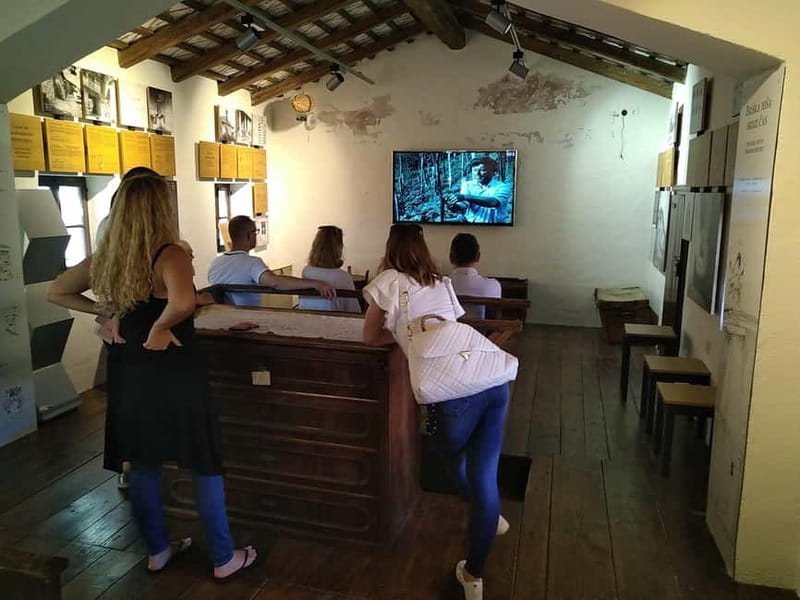
The most useful stop for understanding everyday life is the fully furnished house of a kolon, a typical farmer in the area around the 1850s. This visit shifts the focus away from soldiers and walls and toward work, food, family, and the rhythm of a rural household.
You explore the wine cellar, kitchen, bedroom, and a balcony with a broad view across the rolling hills. Each space adds something different. The cellar points toward the importance of wine in Brda. The kitchen helps you think about household work and food preparation. The bedroom and balcony show how a family’s private life was tied to the surrounding countryside.
The house is valuable because a fortress tour can otherwise become all walls, dates, and military explanations. Here, you see how ordinary people occupied the village and how their homes were arranged.
I would pay particular attention to the building itself. The tour explains the clever ways these houses were constructed, including why the roofs are not steep and what the geometric shapes beneath the roofs mean. Those features are easy to miss if you only walk past the façades.
The balcony view is also a useful reminder that Brda is not only about the village. From this elevated position, the setting connects the defensive settlement with the hills and farms around it. It gives you a strong photo opportunity, but it also helps explain why the village feels so closely tied to its surroundings.
A short film about Brda in the 1960s
The tour includes a 10-minute film about Goriška Brda in the 1960s, with live commentary from your guide. This is a small but worthwhile part of the experience because it adds recent social history to the older fortress story.
The film helps you compare the region’s past with its more modern appearance. Rather than stopping at the Roman era or the 16th-century fortress, the tour shows how Brda looked and lived within living memory.
The live commentary is important. A film on its own can leave you guessing about places, customs, or changes. With the guide explaining what you are seeing, the footage becomes part of the larger story instead of a pause in the walk.
Still, the film takes 10 minutes of a one-hour tour. That is one-sixth of the total time, so you should decide what kind of experience you want. If you enjoy local history and social detail, it adds depth. If you mainly want to wander the lanes and photograph the towers, the indoor viewing makes the schedule feel tighter.
Elsewhere in Slovenia, a very different day:
- Ljubljana: Postojna Cave & Predjama Castle Tickets and Tour
★ 4.9 · 2,146 reviews - From Ljubljana: Trip to Lake Bled and Bled Castle
★ 4.7 · 1,426 reviews - Postojna Cave and Predjama Castle – Entrance Tickets Included
★ 5.0 · 938 reviews - Slovenia in One Day: Lake Bled, Postojna Cave and Predjama Castle
★ 5.0 · 879 reviews
The narrow gase and Šmartno’s house design
Šmartno’s narrow alleyways are called gase. Walking through them is one of the clearest ways to feel the village’s fortified character. The lanes are close and intimate, with houses built in ways that make the settlement feel protected and tightly organized.
Your guide points out the construction methods and the geometric shapes below the roofs. These are the kinds of details that reward a local guide. You might notice the shapes, roof angles, or building lines on your own, but you are less likely to understand why they were made that way.
The walk also offers several places for photographs. The towers, church setting, lanes, house details, and balcony view all give you different kinds of pictures. If you care about social media images, the tour identifies the most photogenic points rather than leaving you to guess.
Keep your camera ready, but do not expect unlimited time at each spot. The group is private, which gives you more flexibility than a large public tour, but the one-hour schedule still requires some discipline. If you want long photo sessions, return after the tour and explore at your own speed.
The private format is especially helpful here. A group of five can move through the tight lanes without the stop-and-start feel that often comes with a large crowd. You can also ask questions about buildings that catch your eye.
St. Martin’s Church and the meaning behind the paintings
St. Martin’s Church sits on a raised level above the village. That position is not just scenic. The tour explains what happened at the site before the largest church in the region was built there in the 18th century, and why the building process was unusual.
This part of the tour brings together religion, local power, construction, and the village’s earlier troubles. The raised setting also gives the church a physical presence over Šmartno, making it a natural final point for the story of the settlement.
Inside, you see paintings by Tone Kralj in strong, lively colors. The guide does more than point them out. Irena explains the hidden meaning in some of the images, giving you a reason to look closely at details that might otherwise pass unnoticed.
That interpretation is one of the strongest reasons to take the tour with a local guide. Art in a village church can be easy to skim past, especially when you are more focused on architecture or photographs. Once you understand that some images carry a second message, the visit becomes more active. You begin searching the walls for clues.
The church is also a good counterweight to the fortress. Šmartno’s story is not only about danger and defense. It is also about belief, community, and the way a village expresses its identity through buildings and art.
What Irena adds to the experience
Irena is the guide named in the strongest feedback, and her contribution sounds central to the tour’s appeal. She is praised for explaining Šmartno and Brda with energy, connecting the village’s past to the wider culture of the region.
That matters on a short tour. A one-hour walk can easily become a rushed list of dates. A guide who tells the story with enthusiasm helps each stop connect to the next: Roman-era routes, fortress construction, defenders, farmers, wine cellars, church art, and life in the 1960s.
I also value the fact that the tour covers Goriška Brda as a whole. Irena explains what the area is known for and which places should not be missed while you are visiting. That advice can help you plan the rest of your time instead of treating Šmartno as a stand-alone stop.
The tour is conducted in English, and the group is private. Those details suit you if you want to ask questions freely or prefer a more personal pace. You will not be placed into a large mixed group, and the guide can focus on your interests within the limits of the schedule.
Is $41 good value for a private group?
At $41 for up to five people, the price is easiest to justify when you share it with family or friends. A full group pays about $8.20 per person for a private, guided introduction to the village. That is a reasonable price for the guide’s time, the house visit, the church interpretation, the film, and the local orientation.
For two people, the cost comes to $20.50 each. That is still fair if you care about context and want a guide rather than a self-guided stroll. For one person, the value is more personal and less financial, since the private-group pricing does not drop with group size.
The experience does not include shopping for souvenirs or local products in village shops. That is not a serious weakness, but you should budget extra time and money if you want to browse after the walk. The tour focuses on history, architecture, local life, and art rather than purchases or tastings.
You can cancel up to 24 hours in advance for a full refund, and you can reserve now and pay later. Those terms make it easier to fit the walk into a changing Slovenia itinerary. The start time depends on availability, so check the schedule before planning other activities around it.
Who should book this Šmartno walk?
I would recommend it to you if you enjoy small places with a strong local story. The tour suits people who want more than photographs, especially those interested in fortifications, traditional houses, village churches, and regional culture.
It is also a good choice for families and small groups. The tower search gives children a simple mission, while the house and church provide concrete things to look at. The private format should make it easier to ask questions or adjust the emphasis.
Wine-focused visitors can also benefit, even though this is not presented as a tasting tour. The kolon house and cellar help explain Brda’s farming culture, while the guide provides ideas for seeing more of the region.
You may want to skip it if you prefer completely independent wandering or if you have no interest in historical explanation. One hour is enough for an introduction, but the structure leaves less room for unplanned stops.
Practical advice for making the hour count
Arrive at the big round tower and village map by the parking lot, before the entrance. This is the stated meeting point, so you should not wait inside the village or near the church.
Because the tour is only one hour, arrive ready to walk and listen. You will move through narrow lanes, enter historic buildings, watch a 10-minute film, and visit the church. Comfortable footwear is a sensible choice, although no special equipment is listed.
Think of the tour as an orientation to Šmartno and Goriška Brda, not the whole day’s activity. Afterward, you can revisit the lanes, take more photographs, visit local shops, or continue to other Brda sights suggested by your guide.
The best approach is to let the guide establish the story first. Once you know why the towers exist, how the houses work, and what the church paintings mean, your second look at Šmartno will be far more rewarding.
Should you book the Šmartno Village Walking Tour?
Book it if you want a concise, personal introduction to Goriška Brda, especially if you are visiting with up to four companions. The strongest parts are the kolon house, the tower search, the church paintings, and Irena’s lively explanation of local history.
The one-hour limit is the only real caution. You will not have much spare time for shopping or lingering photographs during the guided portion. For most people, that is easy to solve: take the tour first, then stay in Šmartno afterward and explore at your own pace.
FAQ
Where does the Šmartno walking tour meet?
The meeting point is by the big round tower and the map of the village, before the entrance and beside the parking lot.
How long does the tour last?
The tour lasts one hour.
How much does the experience cost?
The price is $41 per group of up to five people.
Is the tour private?
Yes. The experience is offered for a private group.
What language is the tour conducted in?
The live tour guide speaks English.
What does the tour include?
It includes a guided tour of Šmartno with a local guide.
Does the tour include shopping?
No. Shopping for souvenirs or local products in local shops is not included.
How many fortress towers can you see during the tour?
You can see five of the remaining towers from Šmartno. One tower is not accessible during the tour, and the experience encourages you to search for the seven towers of the old fortress.
Will I visit a traditional house?
Yes. The tour includes a fully furnished house belonging to a kolon, a typical farmer in the area around the 1850s.
Can I cancel the booking for a refund?
Yes. You can cancel up to 24 hours in advance for a full refund.
New around Ljubljana
- Zagreb to Slovenia: Discover Bled and Ljubljana in a Day★ 4.7 · 2 reviews
- Woop! Fun park with 21 attractions★ 4.6 · 3 reviews
- Gokart experience at Woop! karting – the fastest attraction★ 4.0 · 5 reviews
- Private Zagreb Tour from Ljubljana★ 4.5 · 3 reviews
- Private Fun Park activity in Ljubljana★ 4.5 · 3 reviews
- Wine and Culinary Adventure in Jeruzalem – Full Day Tour from Ljubljana or Ptuj★ 5.0 · 5 reviews
- Velika Planina Guided Hike from Ljubljana★ 4.0 · 5 reviews
- Private tour of Venice from Ljubljana★ 5.0 · 6 reviews
Walking Tours, compared.
Guided Walk & Funicular Ride to Ljubljana Castle
Read our review →

Piran Walking Tour with Local Wine and Food Tasting
Read our review →
Ljubljana 2Hours and 30Minute Walking Tour with Local Guide
Read our review →Browse the lists this tour appears in