
Reviewed · SLOVENIA
Fly into the tannery of Europe
Slovenia keeps its industrial stories close. I like the way this four-hour experience pairs Villa Mayer’s elegant late-historic architecture with the Slovenian Leather Museum, giving you two very different views of Šoštanj. I also like the small maximum group of nine, which should make a local cultural visit more relaxed than a large coach outing.
The main caution is value. At $399.25 per person, this is a costly half-day, especially since the named museum visits total about one hour. The schedule leaves several hours unexplained, so I would confirm exactly what the full experience includes before paying.
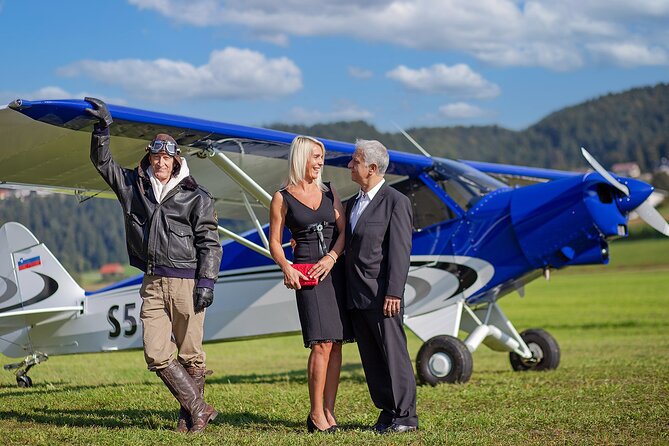
The meeting point at Športno letališče in Topolšica gives the outing an unusual start, and the title suggests an aviation or adrenaline element. Still, the published details clearly identify Villa Mayer and the leather museum as the main cultural stops. That makes this a better fit for curious visitors who want a focused introduction to Šoštanj than for anyone seeking a long museum day.
In This Review
- Key points to know before you go
- Why Šoštanj makes an unusual cultural stop
- Villa Mayer: thirty minutes of architecture and civic history
- The Slovenian Leather Museum and the story of a vanished trade
- How the two stops work together
- The airport meeting point and the four-hour schedule
- Is $399.25 per person fair?
- Who will enjoy this most?
- Booking timing and cancellation
- Should you book Fly into the tannery of Europe?
- FAQ
- Where does the experience start?
- What time does the activity begin?
- Where does the experience end?
- How long does the experience last?
- What locations are included?
- How long is spent at each stop?
- Is admission included?
- What language is offered?
- How many people can join?
- Can I cancel for a refund?
Key points to know before you go
- Šoštanj’s industrial past is the central theme: The leather industry grew from a craft into an important industrial sector during the first half of the 20th century.
- Villa Mayer offers an architectural change of pace: The restored villa reflects bourgeois life and late historicism around the turn of the 19th and 20th centuries.
- The leather museum is a rare subject: Few cultural stops focus so directly on tanning and leather production in Slovenia.
- The group is capped at nine people: This is a useful size for a personal, low-key cultural outing.
- The stated museum visits take about one hour: Ask about the rest of the four-hour program, particularly any flight, food, or activity connected with the airport meeting point.
- Free cancellation applies until 24 hours before departure: This gives you a useful safety margin when arranging a Slovenia itinerary.
Why Šoštanj makes an unusual cultural stop
Šoštanj is not presented as a standard sightseeing base built around famous monuments. Its appeal comes from a working past: crafts, factories, business families, and the people who built a local economy around leather.
That gives this experience a practical sense of place. Instead of moving through a famous old center and checking off a landmark, you get a closer look at how industry shaped one Slovenian town. I find that kind of stop especially worthwhile when you have already seen the country’s lakes, mountains, and grand churches and want a more ordinary story.
The phrase tannery of Europe points to the town’s former importance in leather production. For centuries, leather work was an important craft in Slovenia. Industrial change gradually turned that craft into a larger business, and by the first half of the 20th century, leather had become a major industrial sector.
That story also has a difficult second half. A crisis in the latter part of the 20th century caused most Slovenian leather industries to close. The museum therefore has two jobs: it explains how the industry grew, and it preserves a trade that largely disappeared.
You should expect the experience to feel local rather than grand. That is its strength. The subject is specific, and the town gives you a chance to see Slovenian history through work and production instead of only through art and politics.
Other Ljubljana trips that pair well with this one:
- Ljubljana: Postojna Cave & Predjama Castle Tickets and Tour
★ 4.9 · 2,146 reviews - From Ljubljana: Trip to Lake Bled and Bled Castle
★ 4.7 · 1,426 reviews - Postojna Cave and Predjama Castle – Entrance Tickets Included
★ 5.0 · 938 reviews
Villa Mayer: thirty minutes of architecture and civic history
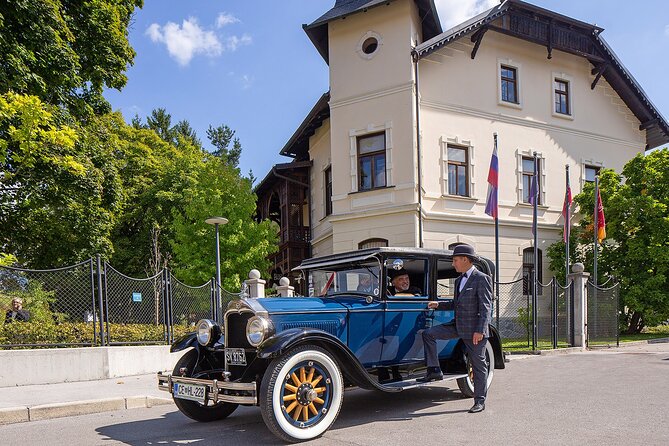
The first listed stop is Villa Mayer, a municipal building in Šoštanj. It was built around the turn of the 19th and 20th centuries by Dr. Fran Mayer, a lawyer who served as mayor of Šoštanj between the world wars.
The villa is described as a typical example of bourgeois architecture from the late historicist period. In plain terms, you are looking at the kind of substantial town house associated with a prosperous professional family during an age when local civic leaders wanted their homes to show status, taste, and security.
The building’s connection with Dr. Mayer gives it more interest than a decorative facade alone. You can think of it as a compact portrait of local leadership. A lawyer, mayor, and prominent resident commissioned a home that reflected his place in the community, and the building later became part of the town’s public cultural life.
The Municipality of Šoštanj has owned Villa Mayer since 2002. It was renovated in 2009, and permanent cultural heritage collections were then established for public access. That renovation matters because you are not visiting a derelict shell or a private residence glimpsed from the street. The building has been prepared as a public venue.
The visit is scheduled for about 30 minutes, with admission included. That is enough time for a concise introduction to the villa, its architecture, and the collections. It is not enough for an unhurried architectural study, so I would treat this as a focused orientation rather than a major museum visit.
I like the contrast Villa Mayer creates with the leather museum. One stop shows the home and public identity of a local elite figure. The other turns toward labor and industrial production. Together, they give you two sides of the same town: civic life above and working life below.
Because the supplied information does not name a guide or describe individual rooms, do not arrive expecting a detailed room-by-room tour. The exact presentation may depend on the day and the staff available. The most useful questions to ask on site concern the permanent collections and the villa’s original connection with Dr. Mayer.
The Slovenian Leather Museum and the story of a vanished trade
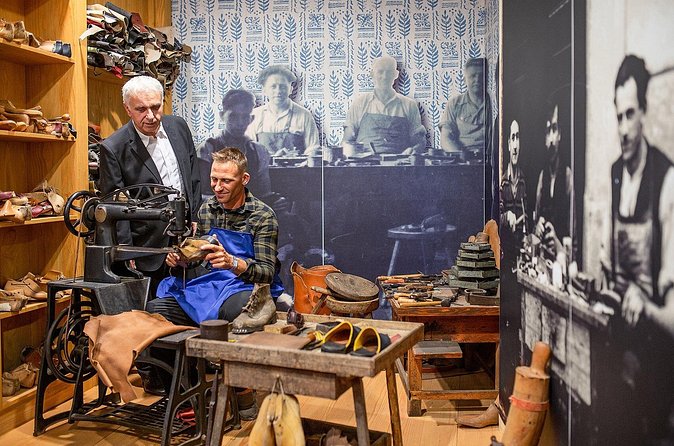
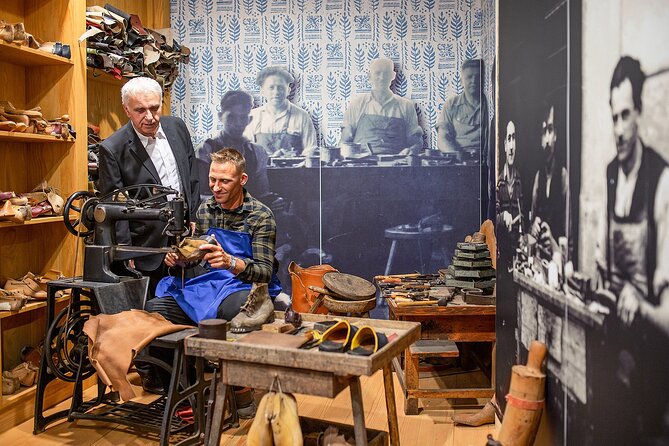
The second listed stop is the Slovenian Leather Museum, or Muzej usnjarstva na Slovenskem. This is the heart of the tour for anyone interested in industrial history, traditional crafts, or the way technology changes a town.
Leather work existed in Slovenia for centuries as a craft. That means the subject begins before factories, machinery, and large-scale production. Tanning required practical skill, local materials, and an understanding of a process that transformed animal hides into a usable material.
The Industrial Revolution changed the scale of that work. A craft became an industry, and leather moved into the larger industrial economy. By the first half of the 20th century, it had become an important sector. The museum’s value lies in showing that progression rather than treating leather as a simple old-fashioned trade.
You may find the museum most useful if you enjoy seeing how everyday products are made. Leather is familiar, but the work behind it is usually invisible. A museum devoted to the industry can connect a finished object with the labor, tools, methods, and businesses that once supported it.
The later decline is just as important. A crisis in the second half of the 20th century caused most leather industries in Slovenia to stop operating. That gives the museum a reflective quality. You are not only looking at an industry that once prospered. You are also seeing how economic changes can remove an entire line of work from a region.
The visit lasts about 30 minutes, and admission is included. That is a short visit, but the subject is focused. If you enjoy technical museums, you may wish the schedule allowed more time for displays and questions. If industrial museums are not usually your first choice, the limited duration keeps the stop manageable.
I would pay close attention to how the museum connects local production with national history. The name suggests a broader Slovenian focus, while the tour itself is rooted in Šoštanj. That combination can help you understand the town as part of a wider industrial story, not as an isolated curiosity.
How the two stops work together
Villa Mayer and the Leather Museum could feel unrelated at first. One is a refined historic villa linked to a lawyer and mayor. The other explains a practical industry that supported workers and businesses.
That difference is exactly why the pairing works. Villa Mayer helps you picture the people who held civic power during Šoštanj’s growth. The leather museum helps you think about the economic activity that gave the town its industrial identity.
I also like the scale. You are not being asked to spend an entire day in one specialized museum. The program gives you a short look at architecture, local government, craft, industry, and economic change. For a visitor with limited time in the Šaleška Valley, that can be a sensible cultural sample.
The tradeoff is depth. Thirty minutes at each stop will not satisfy everyone. You will probably leave with a clear outline of the story, but not every detail. If you want a slower museum experience, you should check if additional time can be arranged or if the museum can be visited separately.
The experience has also been praised for bringing together history, adrenaline, and culinary delights. Those elements sound appealing, but the stated schedule does not explain where they fit. The airport meeting point may be important to the wider activity, yet no flight, meal, or specific adrenaline segment is described in the available details. I would not assume those extras are included without confirmation.
Elsewhere in Slovenia, a very different day:
- Slovenia in One Day: Lake Bled, Postojna Cave and Predjama Castle
★ 5.0 · 879 reviews - Ljubljana: Lake Bled and Bohinj Tour with Savica Waterfall
★ 4.8 · 818 reviews - Ljubljana: Castle Entry Ticket with Optional Funicular Ride
★ 4.3 · 718 reviews - From Ljubljana: Lake Bled & Postojna Cave with Entry Tickets
★ 4.8 · 694 reviews
The airport meeting point and the four-hour schedule
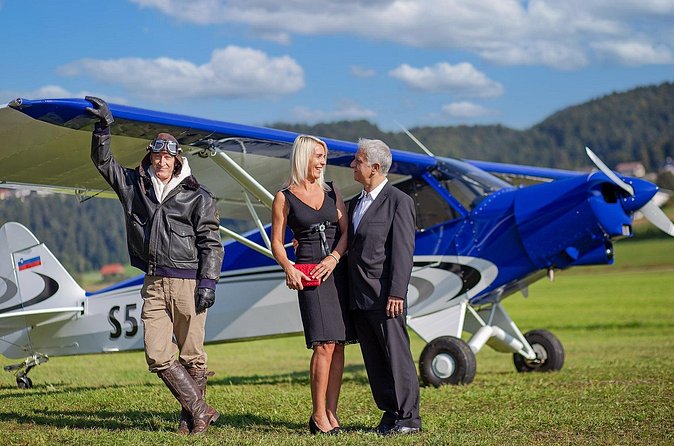
You start at Športno letališče, Topolšica 207c, 3325 Šoštanj, Slovenia, at 10:00 in the morning. The activity ends back at this same meeting point.
That arrangement is convenient if you are already staying near Topolšica or using Terme Topolšica as your base. One person who tried the program was staying at the spa for several days, which suggests the outing can work well as a break from a thermal resort. The return to the starting point also keeps the day simple.
It is less convenient if you are relying on public transport from another Slovenian town, since the meeting point is at a sport airport rather than at a central railway station or a prominent city square. The supplied information does not describe transfers, parking, or transport between the airport and Šoštanj, so you should check those details before booking.
The total duration is about four hours, but the two named stops account for only 60 minutes. That leaves roughly three hours for travel, introductions, activities, food, or other parts of the program that are not explained in the schedule.
This is the most important practical gap. The title Fly into the tannery of Europe suggests that flying may be part of the experience, but the information provided does not state the type of flight, its duration, whether it is included in the price, or any restrictions. If the airport is simply the departure point, that should also be clear.
Before booking, ask these direct questions:
- What happens during the three hours not assigned to the two museum stops?
- Is a flight included, and if so, what kind?
- Are food or culinary tastings included in the $399.25 price?
- Is transport to Villa Mayer and the leather museum provided?
- Does the activity return to the airport at the stated end time?
A clear answer will help you judge the price fairly. Without one, the cost is difficult to compare with other half-day activities in Slovenia.
Is $399.25 per person fair?
At $399.25 per person, this is not a casual museum outing. For two people, the listed price would be $798.50 before any other expenses, so you should be confident that the complete four-hour program offers more than the two short admissions.
The price may make sense if it includes a flight, specialist access, food, private transport, or a highly personal small-group experience. The cap of nine people is a positive feature, since a group of that size can move easily and ask questions without the feel of a bus tour.
The included admissions also remove a small extra cost, but they do not by themselves explain the full price. I would judge the experience on the entire program, not on the museum entry alone.
For a history-minded visitor, the value comes from access to a very specific part of Slovenia. You are paying for a local story that would be easy to miss if you simply passed through the valley. For someone mainly seeking famous sights, the price may feel hard to justify.
I would also compare the cost with your wider itinerary. If you are already staying at Terme Topolšica, the convenient return to the same meeting point may save time and make the outing more useful. If you have only one day in the area and want a broad survey, a more standard sightseeing option might offer more stops for less money.
Who will enjoy this most?
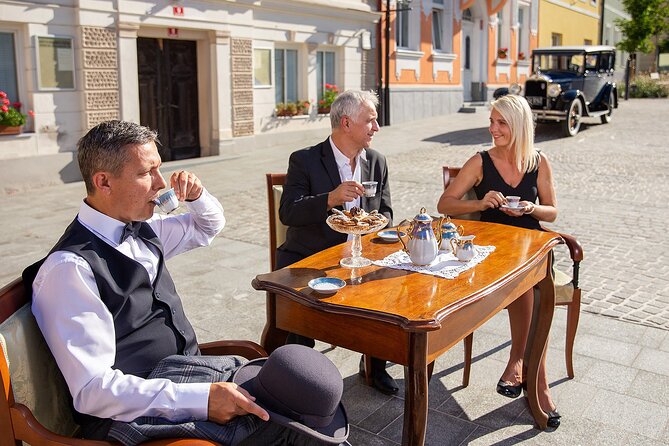
I would recommend this experience to you if you enjoy:
- Small Slovenian towns and local civic history
- Architecture from the late 19th and early 20th centuries
- Museums about work, manufacturing, and traditional crafts
- Unusual subjects that do not appear on every Slovenia itinerary
- Short cultural visits combined with a wider activity
- Staying near Topolšica or Šoštanj
You may be less happy if you want a full museum day, a famous landmark, or a clearly explained walking tour through the town. The cultural stops are brief, and the details of the wider four-hour program need clarification.
The experience is listed in English, which is helpful for international visitors. A mobile ticket also makes arrival easier, although the practical transport details remain worth checking.
Most people can participate, and the maximum group size is nine. No special participation limits are listed in the supplied details, but you should still ask the provider if you have a specific mobility or health concern.
Booking timing and cancellation
This experience is booked an average of 177 days in advance. That is a strong sign that you should not leave it until the last minute if the date matters to you, particularly if you are planning around a spa stay or a fixed Slovenia route.
Confirmation normally arrives at booking. If you book within two days of the activity, confirmation may take up to 48 hours and remains subject to availability. I would avoid building a tight same-day connection around this tour until your booking is confirmed.
Free cancellation is available until 24 hours before the 10:00 start time. That means you need to cancel by 10:00 the previous day according to local time to receive a full refund. Cancellations or changes made less than 24 hours before departure are not accepted for a refund.
Should you book Fly into the tannery of Europe?
I would book this if you want an unusual, small-group look at Šoštanj and you are willing to confirm the full program first. Villa Mayer and the Slovenian Leather Museum create a smart pairing, and the town’s leather story offers a useful change from Slovenia’s more familiar sights.
I would hold off if the $399.25 price covers only the two short museum visits and basic transportation. The cost is high for that limited schedule. Ask what fills the remaining three hours, and confirm the role of the sport airport, any flight, and the promised culinary or adrenaline elements.
For a stay in Topolšica, this could be a memorable half-day choice. For everyone else, the decision depends on the answer to one simple question: what exactly happens between 10:00 and the return to the airport?
FAQ
Where does the experience start?
It starts at Športno letališče, Topolšica 207c, 3325 Šoštanj, Slovenia.
What time does the activity begin?
The stated start time is 10:00 am.
Where does the experience end?
The activity ends back at the same meeting point at Športno letališče.
How long does the experience last?
The total duration is approximately four hours.
What locations are included?
The named stops are Villa Mayer and the Slovenian Leather Museum, Muzej usnjarstva na Slovenskem.
How long is spent at each stop?
Villa Mayer is scheduled for about 30 minutes, and the Slovenian Leather Museum is also scheduled for about 30 minutes.
Is admission included?
Yes. Admission tickets are included for both Villa Mayer and the Slovenian Leather Museum.
What language is offered?
The experience is offered in English.
How many people can join?
The activity has a maximum of nine people, and most people can participate.
Can I cancel for a refund?
Yes. You can cancel at least 24 hours before the start time for a full refund. Changes or cancellations made less than 24 hours before the start time are not accepted for a refund.
New around Ljubljana
- Zagreb to Slovenia: Discover Bled and Ljubljana in a Day★ 4.7 · 2 reviews
- Woop! Fun park with 21 attractions★ 4.6 · 3 reviews
- Gokart experience at Woop! karting – the fastest attraction★ 4.0 · 5 reviews
- Private Zagreb Tour from Ljubljana★ 4.5 · 3 reviews
- Private Fun Park activity in Ljubljana★ 4.5 · 3 reviews
- Wine and Culinary Adventure in Jeruzalem – Full Day Tour from Ljubljana or Ptuj★ 5.0 · 5 reviews
- Velika Planina Guided Hike from Ljubljana★ 4.0 · 5 reviews
- Private tour of Venice from Ljubljana★ 5.0 · 6 reviews