
Reviewed · TOURS
Classic Ljubljana Group Tour
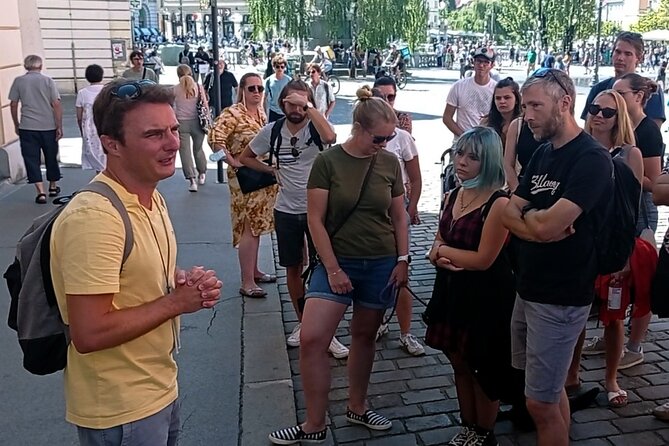
Ljubljana reveals itself quickly on foot. This two-hour walk links the city’s key squares, bridges, markets, churches, and Plečnik buildings in a clear route that makes a first visit much easier. I like the way it combines basic city orientation with stories about Slovenia’s national poet, its famous dragons, and the architect who shaped modern Ljubljana. I also like the frequent photo stops, since you can enjoy the center without worrying about traffic or parking.
The main consideration is the pricing arrangement. The listed price is $16.94 per person, while the same local company also runs a tip-based free walk. At times, paid bookings and free-tour participants are placed in one group, so you may pay in advance while others tip at the end. The tour itself receives very strong praise, but you should understand this setup before booking.
In This Review
- Key points at a glance
- Starting beneath Ljubljana’s pink church
- France Prešeren and the national story
- The Triple Bridge and Plečnik’s Ljubljana
- The covered market and a taste of local life
- Two bridges, two very different stories
- Saint Nicholas Cathedral and the Baroque center
- Medieval Town Square and Robba Fountain
- Town Hall and the compact old town
- Shoemaker’s Bridge and Plečnik’s hidden meanings
- Congress Square and the final perspective
- What the guides do best
- The price question: paid booking or tip-based walk
- Practical details for a smooth walk
- Who should choose this tour?
- Should you book the Classic Ljubljana Group Tour?
- FAQ
- How long does the Classic Ljubljana Group Tour last?
- Where does the tour begin?
- Where does the tour finish?
- Is the tour offered in English?
- Are admission tickets included?
- Is a tasting included?
Key points at a glance
- A smart first walk: The route covers the main historic center in about two hours, making it useful soon after arrival.
- Plečnik takes center stage: You see several works by Jože Plečnik, including the Triple Bridge, covered market, and National and University Library.
- No paid admissions: This is an outdoor walking tour, so entry tickets are not part of the experience.
- Small local tasting included: A sample of Slovenian schnapps and liquors adds a distinctly local touch.
- Guide quality matters here: Tina, Vojka, Lucy, Lara, Domen, Helena, and Anya have all been praised for clear English, humor, and lively storytelling.
- Know the payment model: The advance price secures your place, but the group may sometimes include people attending through the free-tour format.
Starting beneath Ljubljana’s pink church
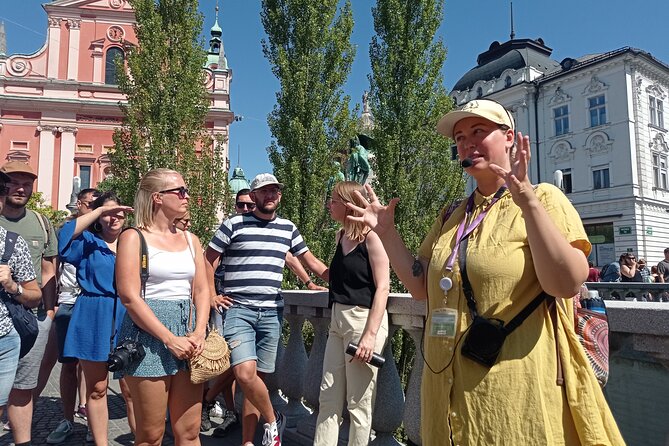
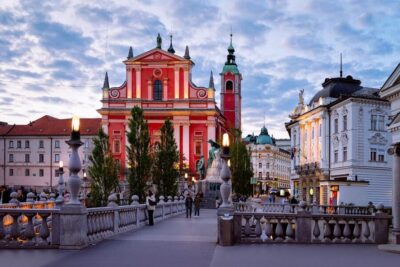
The tour begins at Prešeren Square, the natural center of Ljubljana’s pedestrian core. Meet at Prešernov trg, where the pink Franciscan Church provides an easy landmark and the square gives you a quick sense of how compact the old center is.
This is a good opening because the guide first explains the basic story of Ljubljana before leading you onward. You are not simply marched from monument to monument. The square becomes a reference point for the city’s culture, politics, poetry, and architecture.
The walking pace should suit most people, with frequent pauses rather than one long lecture. Still, two hours is not enough for every detail. Think of this as an introduction that helps you recognize the city and decide where to return later.
A few more Ljubljana trips to compare
- Ljubljana: Postojna Cave & Predjama Castle Tickets and Tour
★ 4.9 · 2,146 reviews - From Ljubljana: Trip to Lake Bled and Bled Castle
★ 4.7 · 1,426 reviews - Postojna Cave and Predjama Castle – Entrance Tickets Included
★ 5.0 · 938 reviews
France Prešeren and the national story
A short stop at the statue of France Prešeren introduces Slovenia’s national poet. His image is one of the most familiar in the city, and his work helped shape Slovenian identity during the Romantic period of the 19th century.
The guide also tells the more personal side of Prešeren’s life, including why his romantic story was no fairy tale. That kind of human detail keeps the history from becoming a list of dates. You get a sense of the man behind the monument, along with an explanation of why he matters so much to Slovenia.
This stop lasts only a few minutes, but it gives the rest of the walk a useful cultural frame. Ljubljana is not only a pretty old town. It is also the capital of a country whose language and national identity have had to hold their own beside larger neighbors.
The Triple Bridge and Plečnik’s Ljubljana
From Prešeren Square, the group moves to the Triple Bridge, or Tromostovje. This is Ljubljana’s best-known bridge complex and one of the clearest examples of Jože Plečnik’s imagination.
Rather than building one ordinary crossing, Plečnik created a central bridge flanked by two pedestrian bridges. The result is practical, memorable, and unmistakably Ljubljana. Your guide explains why the structure has three parts and how Plečnik’s work helped give the city its current appearance.
Plečnik is the architectural thread running through much of the tour. His work is associated with a distinctive vision of Ljubljana, and several of the day’s stops show how he reshaped everyday public spaces rather than only designing grand monuments.
If you like architecture, pay close attention here. If you do not, the bridge is still an easy place to appreciate because the design is visible at a glance and the surrounding riverfront offers good photo opportunities.
The covered market and a taste of local life
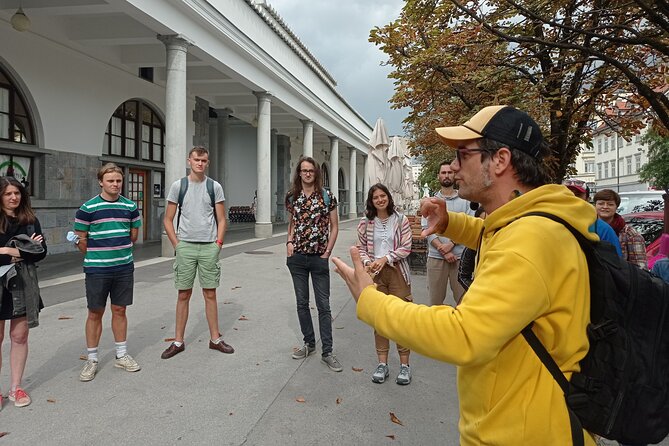
The route continues to Plečnik’s covered market, often called the Colonade. This long structure is more than a place to buy food. It is part of the city’s public design, with details and symbols that reward a closer look.
The stop is brief, so you should not expect time for a full market visit or a leisurely food shopping trip. Instead, the guide points out the structure’s purpose and some of its less obvious features. You may want to return later if you are interested in local produce or want to browse at your own pace.
Another nearby stop, at Adamič-Lundrovo nabrežje 5, is described as one of the best places in town for local produce. That makes this section especially useful if you are planning to buy something for a picnic or want a more direct look at daily life in the center.
The included tasting of local schnapps and liquors adds another small local detail. It is not a full food tour, but the tasting gives you a chance to sample a Slovenian drink and ask questions about it.
Elsewhere in Slovenia, a very different day:
- Slovenia in One Day: Lake Bled, Postojna Cave and Predjama Castle
★ 5.0 · 879 reviews - Ljubljana: Lake Bled and Bohinj Tour with Savica Waterfall
★ 4.8 · 818 reviews - Ljubljana: Castle Entry Ticket with Optional Funicular Ride
★ 4.3 · 718 reviews - From Ljubljana: Lake Bled & Postojna Cave with Entry Tickets
★ 4.8 · 694 reviews
Two bridges, two very different stories
The Butchers’ Bridge is Ljubljana’s modern love-lock bridge. Couples have attached padlocks to its railings, giving it a playful reputation, but the guide also explains how the present bridge differs from its original plans.
That contrast is worth noting. Ljubljana’s center is not frozen in one historical period. Medieval streets, Baroque monuments, 20th-century planning, and newer public art all sit close together. The Butchers’ Bridge makes that mixture easy to see.
Next comes Dragon Bridge, or Zmajski Most, one of the city’s most photographed sights. Its dragon statues are hard to miss, but the tour adds a useful correction: the bridge was not originally called Dragon Bridge.
This is the sort of short fact that gives a familiar monument more character. You get the photo, but you also get a story to remember. Since the stop is outdoors and free, you can take pictures without the pressure of an admission queue.
Saint Nicholas Cathedral and the Baroque center
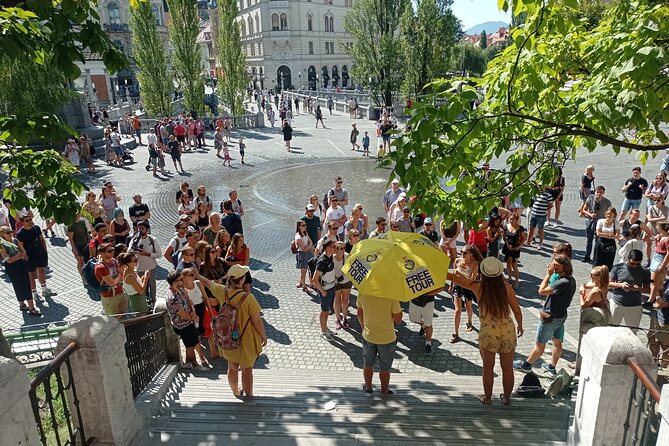
Saint Nicholas’ Cathedral is small compared with the great cathedrals in nearby countries, but its size is part of the point. Ljubljana’s center is intimate, and the cathedral fits that scale while still carrying major importance in Slovenian religious and artistic life.
The guide focuses on its history and its role in Slovenian Baroque architecture. The listed tour does not include paid entry into locations, so you should not expect an extended interior visit as part of the walk.
Even from outside, the cathedral helps explain the changing character of the old center. The market, bridges, cathedral, and squares are close together, so the route gives you a strong sense of how Ljubljana developed in layers.
Medieval Town Square and Robba Fountain
Town Square, or Mestni trg, was the central square of medieval Ljubljana. It is one of the best places to hear the city’s older stories because the space has served civic, commercial, and public purposes for centuries.
Here you also see Robba Fountain, Ljubljana’s best-known Baroque artwork. Its design is familiar enough to invite comparison with other European fountains, and the guide explains the connection rather than leaving you with a simple photo stop.
The fountain is especially useful for putting Ljubljana into a wider European context. The city may be compact, but its artistic traditions were shaped by larger Central European currents. This stop is short, though, so anyone with a strong interest in Baroque art may want to return for a slower look.
Town Hall and the compact old town
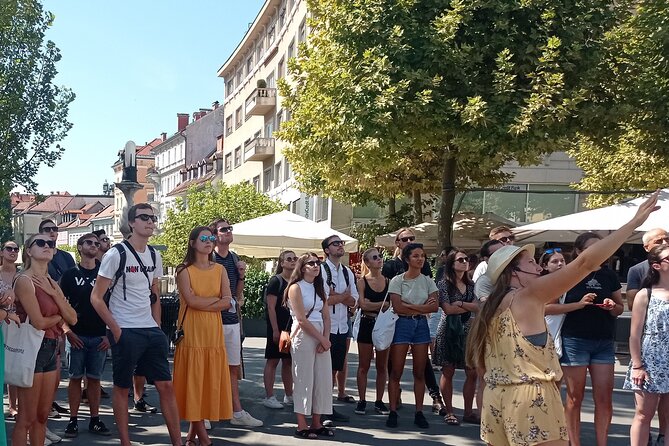
Ljubljana’s Town Hall has served city politics for more than 500 years. Its architecture is described as confused, which is a fair warning not to expect one perfectly unified style. The building reflects changes over time, renovations, and shifting civic needs.
That makes it a better stop than a quick photograph might suggest. The guide can connect the building to the city’s political life and explain why its appearance does not fit neatly into one category.
Much of the route takes place in Ljubljana’s old town. The old town is not a single monument or one enclosed attraction. It is a network of streets and small public spaces, with many of the earlier stops already forming part of it.
The official timing gives the old town a longer block, but the route naturally overlaps this area. That is useful because you see the historic center as a functioning neighborhood, not just a collection of isolated sights.
Shoemaker’s Bridge and Plečnik’s hidden meanings
Shoemaker’s Bridge, or Cevljarski Most, is another favorite meeting point. Its name recalls the medieval trades that once occupied the area, and the guide explains how the bridge functioned as a kind of shopping zone in earlier times.
This stop helps connect architecture with ordinary work. Bridges were not only crossings. They could also be places to trade, meet, and conduct business.
The National and University Library is one of Plečnik’s most important buildings on the route. Its design contains symbolism and details that are easy to miss if you pass by without context.
Five minutes can only cover a few of its stories. That is not a flaw so much as a reason to return if architecture interests you. The guide’s role here is to point out the ideas behind the facade and show how Plečnik used a public building to express national and cultural meaning.
Several guides have earned praise for this kind of explanation. Lucy is noted for clear English and an easy manner. Tina 2 is praised for useful local advice as well as strong storytelling, while Vojka is appreciated for humor and her clear respect for Slovenian heritage.
Congress Square and the final perspective
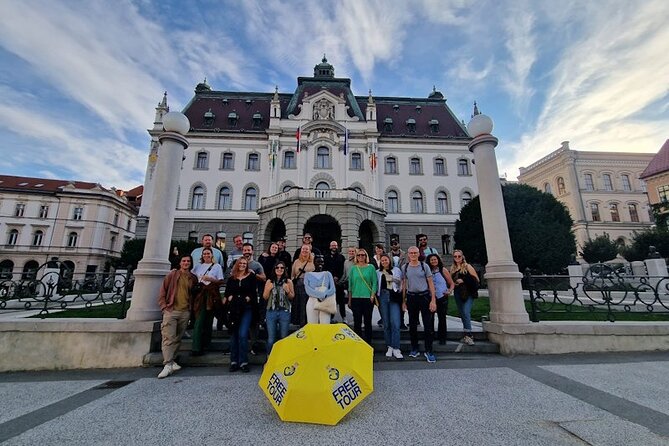
The walk ends at Congress Square, Ljubljana’s largest square and one of its most political spaces. The guide connects it with events that shaped Slovenia and wider European history.
Ending here works well. You have moved from poetry and medieval trade through architecture, religion, public markets, and civic power. The square gives those separate subjects a final setting and helps you understand why the city center has mattered for so long.
The end point is only about two or three minutes from Prešeren Square, so you are not left far from the starting area. That is convenient if you want to continue exploring, return to the market, or stop for a drink nearby.
What the guides do best
The strongest part of this experience is the guiding. The format depends on a person who can make short stops feel connected, and the most praised guides appear to do that well.
Tina 1 is described as clear, interesting, and informative. Tina 2 receives similar praise, with added appreciation for her stories and practical advice about local transport and time in the city.
Vojka is singled out for her humor, answers to questions, and respect for her subject. Lucy is praised for excellent English and an ability to keep the tour fun without losing the historical thread. Domen is described as energetic and full of useful information, while Helena is credited with explaining Slovenia’s culture, people, and history in a way that held attention.
You may also encounter Lara or Anya. The available feedback describes both as strong guides, with Anya in particular noted for being friendly and informative.
Guide quality can vary from one departure to another, but the pattern is clear: this is not meant to be a silent walk with memorized labels. Questions are welcome, and the guides aim to add amusing personal details to the main story.
The price question: paid booking or tip-based walk
At $16.94 per person, the price is reasonable for a two-hour guided orientation, especially with a local schnapps tasting included. You are paying for a confirmed place through the booking platform, an English-speaking guide, and a structured route through the city center.
But there is an important wrinkle. Ljubljana Free Tour also operates a tip-based version of the walk. If there are not enough advance bookings to form a separate paid group, the two groups may be combined.
That means you could arrive and find that some people paid nothing up front, planning to tip the guide later. The operator explains that the advance price is close to the usual tip and that paid participants are not expected to tip again.
This arrangement has caused understandable frustration. The issue is not the quality of the walk. The issue is that the difference between a prepaid tour and a free, tip-based tour may not be clear before you arrive.
I would compare the price with your comfort level. If you value a reserved place and want to book ahead, $16.94 is a fair amount for the time and coverage. If you prefer the tip-based model, you can ask the operator directly about the day’s group arrangement before committing.
Practical details for a smooth walk
The experience lasts about two hours and is offered in English. It uses a mobile ticket, and no private transport is provided or needed because the route stays in the central pedestrian area.
The group is capped at 20 people, though one piece of feedback describes a larger group of around 25 on one departure. If keeping the group small matters to you, ask about the expected size in advance.
Most people can take part, and service animals are allowed. The meeting point is near public transportation, which makes it easy to reach from elsewhere in Ljubljana.
Wear shoes suited to walking on city streets and allow yourself time to arrive at the square. Since the tour stops often, you will have repeated chances for photographs, but the tight schedule means you should not expect long breaks at each sight.
Free cancellation is available up to 24 hours before the start time. A cancellation or change made inside that window is not refunded.
Who should choose this tour?
I would choose this walk early in a Ljubljana visit. It gives you a map in your head, points out the bridges and squares you are most likely to revisit, and offers enough history to make later solo wandering more rewarding.
It suits first-time visitors, short-stay visitors, and anyone who prefers to see a city on foot rather than from a vehicle. It is also a good choice if you want a broad introduction without paying separate admission fees.
You may want something else if your main goal is to enter museums, spend a long time inside the cathedral, or study Plečnik’s buildings in architectural detail. The route offers useful introductions, but its many stops mean most explanations are brief.
Should you book the Classic Ljubljana Group Tour?
Yes, with one condition: understand the payment arrangement first. The walk itself offers strong value, covers nearly all of central Ljubljana’s essential sights, and benefits from guides such as Tina, Vojka, Lucy, and Domen, who bring clarity, humor, and local feeling to the route.
I especially recommend it as your first activity in the city. You will leave with a practical sense of direction and a short list of places worth exploring again.
If you dislike paying for a tour that may be combined with a tip-based group, contact the operator before booking and ask which format applies to your departure. If that point does not bother you, the $16.94 price is a sensible way to get oriented in one of Europe’s easiest capitals to explore on foot.
FAQ
How long does the Classic Ljubljana Group Tour last?
The tour lasts approximately two hours.
Where does the tour begin?
It begins at Prešeren Square, at Prešernov trg 1000, Ljubljana, Slovenia.
Where does the tour finish?
The tour ends at Congress Square, or Kongresni trg. The end point is about two or three minutes on foot from Prešeren Square.
Is the tour offered in English?
Yes. English is the listed language for the guided walk.
Are admission tickets included?
No. The walk does not enter locations that charge admission, and entry tickets are not included.
Is a tasting included?
Yes. The experience includes a tasting of local schnapps and liquors.
New around Ljubljana
- Zagreb to Slovenia: Discover Bled and Ljubljana in a Day★ 4.7 · 2 reviews
- Woop! Fun park with 21 attractions★ 4.6 · 3 reviews
- Gokart experience at Woop! karting – the fastest attraction★ 4.0 · 5 reviews
- Private Zagreb Tour from Ljubljana★ 4.5 · 3 reviews
- Private Fun Park activity in Ljubljana★ 4.5 · 3 reviews
- Wine and Culinary Adventure in Jeruzalem – Full Day Tour from Ljubljana or Ptuj★ 5.0 · 5 reviews
- Velika Planina Guided Hike from Ljubljana★ 4.0 · 5 reviews
- Private tour of Venice from Ljubljana★ 5.0 · 6 reviews
Tours, compared.
Postojna Cave & Predjama Castle Tickets and Tour
Read our review →
Savica Waterfall, Lake Bohinj, and Lake Bled Tour
Read our review →
Lake Bled and Bohinj Tour with Savica Waterfall
Read our review →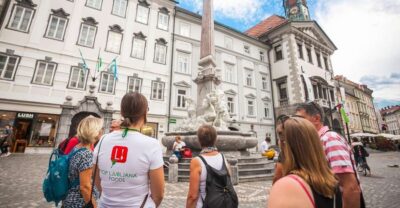
Slovenian culinary experience in Ljubljana – small group – tour
Read our review →Browse the lists this tour appears in